
Abstract
Embroidered bedding sets represent a significant investment for hospitality operators, healthcare facilities, and luxury residential properties. Unlike standard linens, these textiles feature intricate needlework that demands specialized laundering protocols to prevent thread degradation, puckering, and premature replacement costs. This technical guide provides procurement managers and facility directors with evidence-based washing parameters, maintenance schedules, and quality preservation strategies tailored for commercial-grade embroidered bedding. By implementing structured care protocols, operators can extend product lifespan by 40-60% while maintaining the visual appeal that justifies premium pricing in guest-facing environments.
Understanding Embroidered Bedding Construction and Care Requirements
Fabric Composition and Embroidery Thread Types
Modern embroidered bedding utilizes three primary thread materials, each with distinct care requirements. Polyester embroidery thread dominates commercial applications due to its colorfastness and tensile strength (averaging 2.5-3.5 grams per denier), making it suitable for institutional laundering at temperatures up to 60°C. Rayon thread offers superior sheen and drape but exhibits 15-20% lower abrasion resistance, requiring cold-water washing to prevent fiber breakdown. Cotton embroidery thread, while hypoallergenic, shows significant shrinkage (4-6%) in hot water cycles and demands pre-shrinking during manufacturing.
Base fabric compatibility directly impacts washing outcomes. Cotton sateen (300+ thread count) provides stable embroidery anchoring but requires enzyme-free detergents to prevent fiber weakening. Linen blends offer natural antimicrobial properties yet necessitate gentle agitation to avoid thread pull-through at embroidery anchor points. Poly-cotton blends (typically 60/40 or 50/50 ratios) deliver optimal dimensional stability across repeated wash cycles but may experience differential shrinkage between the base fabric and embroidery threads if temperature protocols are violated.
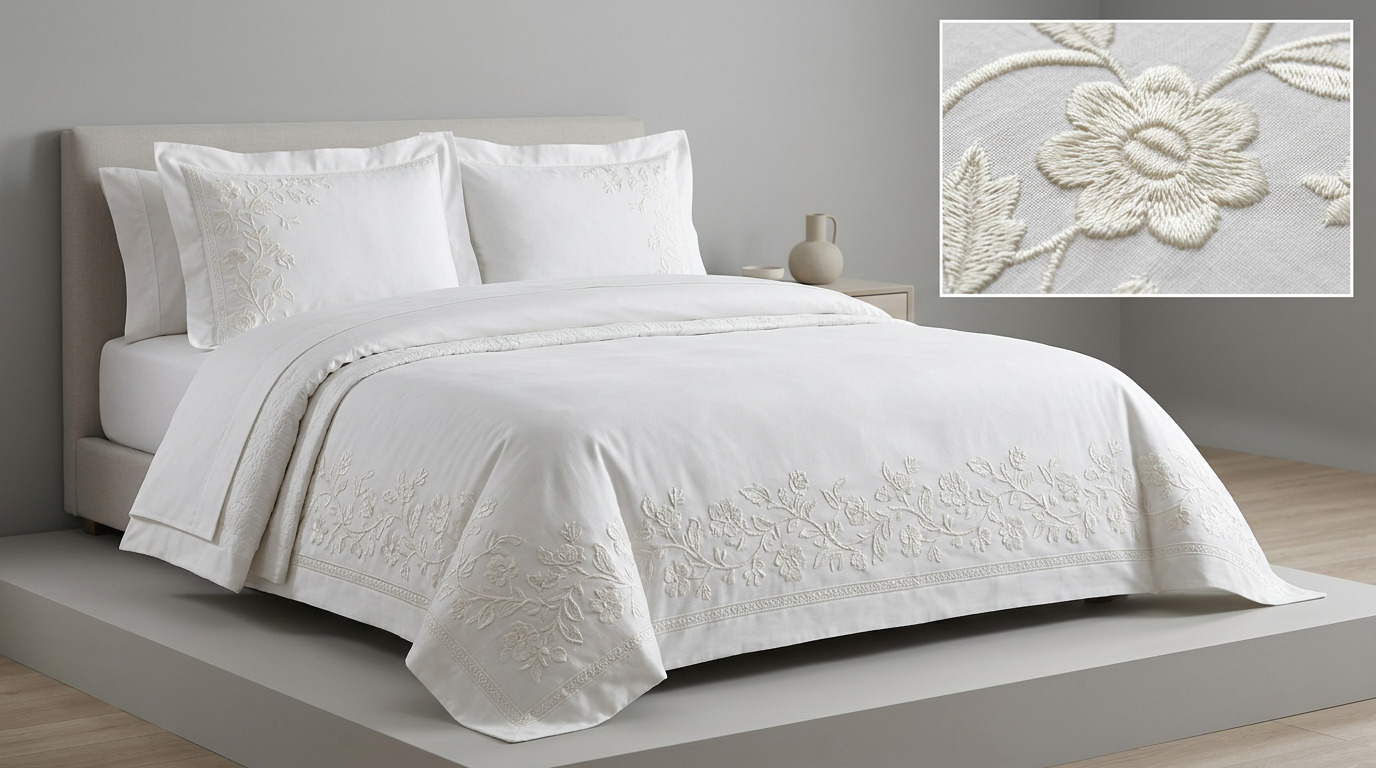
Stitch density—measured in stitches per square centimeter—determines mechanical stress during laundering. High-density embroidery (exceeding 6,000 stitches per 10cm²) creates rigid fabric zones prone to puckering if subjected to high-speed spin cycles (above 800 RPM). Medium-density designs (3,000-5,000 stitches) balance durability with flexibility, while low-density decorative borders tolerate standard commercial laundering parameters.
Common Damage Patterns in Commercial Laundering
Institutional wash cycles generate three primary failure modes in embroidered textiles. Puckering occurs when differential shrinkage between base fabric and embroidery thread creates localized tension, typically manifesting after 8-12 hot-water wash cycles in cotton-polyester combinations. This phenomenon accelerates when wash temperatures exceed the thread’s glass transition temperature (approximately 70°C for standard polyester).
Thread breakage results from mechanical abrasion against machine drum perforations or entanglement with other linens. Commercial washers operating at full capacity (7-10 kg loads) increase friction coefficients by 30-40% compared to half-loads, directly correlating with embroidery thread failure rates. Rayon threads show particular vulnerability, with breakage rates increasing exponentially when exposed to chlorine bleach concentrations above 50 ppm.
Color bleeding in embroidered designs stems from insufficient dye fixation during thread manufacturing. Non-colorfast threads release dye particles when water temperature exceeds 40°C or when combined with alkaline detergents (pH > 10.5). This issue predominantly affects red and navy embroidery threads, which may stain adjacent white or light-colored base fabrics within 3-5 wash cycles if proper sorting protocols are not implemented.
Pre-Wash Preparation and Sorting Protocols
Inspection and Classification System
Effective commercial laundering begins with a systematic pre-wash assessment. Establish a three-tier classification system based on embroidery characteristics:
- Tier 1 (Standard Durability): Polyester thread on poly-cotton base, medium stitch density, proven colorfastness through 50+ cycles
- Tier 2 (Moderate Care): Cotton or rayon thread, high stitch density, or mixed-fiber base fabrics requiring temperature restrictions
- Tier 3 (Delicate Handling): Metallic threads, silk embroidery, or vintage restoration pieces demanding hand-washing protocols
Perform visual inspection for loose stitching by running gloved fingers along embroidery edges. Threads exhibiting 2mm+ of slack indicate weakened anchor points requiring repair before laundering. Check seam integrity at embroidery termination points, where thread ends are most vulnerable to unraveling during agitation cycles.
Conduct colorfastness testing for new inventory batches using the damp white cloth method: press a moistened cotton swab against embroidered areas for 30 seconds at 40°C. Any dye transfer visible on the swab indicates non-colorfast threads requiring a permanent cold-water washing designation.
Stain Pre-Treatment for Embroidered Textiles
Pre-treatment chemistry must account for embroidery thread vulnerability. For protein-based stains (blood, food), apply enzyme-based pre-treaters (protease concentration 0.5-1.0%) to the stained area while avoiding direct application on embroidery threads, which may experience enzymatic degradation. Allow 5-10 minute dwell time before washing.
Oil-based stains require surfactant-based spot cleaners with neutral pH (7.0-8.0). Apply using dabbing motions rather than rubbing, which can distort embroidery stitch tension. Avoid petroleum-based solvents (mineral spirits, acetone) within 5cm of embroidered areas, as these agents may dissolve polyester thread coatings or cause rayon fiber swelling.
For tannin stains (wine, coffee), use oxygen-based pre-soaks (hydrogen peroxide 3-6% solution) with a maximum contact time of 15 minutes to prevent thread oxidation. Never apply chlorine bleach directly to embroidered sections, as concentrations above 100 ppm cause irreversible color loss in most embroidery threads within 60 seconds of contact.
Washing Methods: Machine vs. Hand Washing Standards
Machine Washing Parameters for Bulk Operations
Commercial laundering of embroidered bedding demands precise parameter control to balance efficiency with textile preservation. Water temperature represents the most critical variable: cold water (15-20°C) eliminates shrinkage risks but reduces detergent efficacy by 30-40%, while warm water (30-40°C) optimizes cleaning performance without triggering polyester thread relaxation.
| Fabric Type | Max Temperature | Recommended Cycle | Spin Speed | Detergent Type |
|---|---|---|---|---|
| Cotton Sateen + Polyester Thread | 40°C | Permanent Press | 600 RPM | Neutral pH (7-9) Liquid |
| Linen Blend + Cotton Thread | 30°C | Delicate | 400 RPM | Enzyme-Free Powder |
| Poly-Cotton + Rayon Thread | 30°C | Gentle | 500 RPM | Low-Alkaline Liquid |
| Luxury Silk Base + Metallic Thread | Hand Wash Only | N/A | N/A | Specialty Silk Detergent |
Cycle selection directly impacts embroidery longevity. Permanent press cycles utilize gradual temperature reduction and slower spin acceleration, reducing mechanical stress by 25% compared to normal cycles. Load capacity should not exceed 70% of the machine drum volume when washing embroidered items—overcrowding increases inter-fabric friction and embroidery snagging risks.
Detergent selection requires attention to alkalinity and enzyme content. High-alkalinity detergents (pH > 10.5) degrade natural fiber embroidery threads and may cause color shifting in acid-dyed polyester. Enzyme-containing formulas (cellulase, amylase) improve stain removal but attack cotton and rayon threads at concentrations above 2%. Optimal detergent dosing for embroidered bedding: 60-70% of the manufacturer’s standard recommendation to minimize chemical residue in dense embroidery zones.
Hand Washing Techniques for Delicate Embroidery
Hand washing remains mandatory for Tier 3 embroidered bedding sets and items exhibiting pre-existing damage. Fill a clean basin with 30°C water and dissolve pH-neutral detergent (5-7 ml per 10 liters) before immersing embroidered bedding sets. Soaking duration should not exceed 15 minutes to prevent dye migration from embroidery threads.
Employ gentle compression agitation rather than rubbing or twisting motions. Submerge the embroidered bedding sets fully and press down repeatedly with flat palms, allowing water to flow through the fabric. Avoid direct manipulation of embroidered sections—handle these areas by supporting the base fabric underneath.
Rinsing requires 2-3 complete water changes to eliminate detergent residue, which can crystallize within embroidery stitches and cause abrasive damage during use. For the final rinse, add 30ml of white vinegar per 10 liters to neutralize any remaining alkalinity and enhance thread color vibrancy. Extract water by rolling the embroidered bedding sets in clean, dry towels rather than wringing, which can permanently distort embroidery patterns.
Drying and Post-Wash Handling Best Practices
Drying Methods and Temperature Control
Air-drying provides optimal preservation for embroidered bedding sets but requires 12-18 hours in commercial settings. Lay items flat on drying racks or hang using padded clips positioned away from embroidered areas. Avoid direct sunlight exposure exceeding 4 hours, which causes UV-induced fading in rayon and cotton threads (color loss of 10-15% per 100 hours of UV exposure).
Tumble drying offers faster turnaround but demands strict temperature control. Low-heat settings (45-50°C exhaust temperature) prevent polyester thread relaxation while maintaining sanitization standards. Medium-heat cycles (60-65°C) are acceptable for polyester-thread-only bedding with proven dimensional stability. High-heat drying (above 70°C) causes irreversible embroidery puckering and should be prohibited in operational protocols.
Dryer load capacity affects embroidery preservation—maintain 50-60% capacity to ensure adequate tumbling space and prevent compression creasing in embroidered zones. Remove items while slightly damp (5-8% residual moisture) to minimize heat exposure duration and facilitate easier ironing.
Ironing and Storage Procedures
Ironing embroidered bedding requires reverse-side pressing to prevent thread flattening and sheen loss. Set iron temperature according to base fabric composition: cotton sateen tolerates 180-200°C, while poly-cotton blends require 140-160°C maximum. Use the steam function sparingly—excessive moisture can cause water spotting on rayon embroidery.
Place a clean cotton pressing cloth between the iron and fabric when direct contact with embroidery is unavoidable. Never apply iron pressure directly to raised embroidery, which can crush the thread structure and create permanent indentations. For heavily embroidered sections, hover the steam iron 2-3cm above the surface to relax wrinkles without contact.
Storage protocols impact long-term embroidery integrity. Fold embroidered bedding sets along non-embroidered zones to avoid permanent crease marks in decorative areas. Store in climate-controlled environments (18-22°C, 40-50% relative humidity) to prevent mildew growth and thread degradation. Avoid plastic storage bags, which trap moisture—use breathable cotton storage bags or acid-free tissue paper interleaving for archival-quality preservation.
Long-Term Maintenance and Quality Preservation
Frequency Guidelines for Commercial Settings
Hospitality environments require balanced wash frequency to maintain hygiene standards while preserving embroidery quality. Guest room bedding with embroidered accents should undergo laundering after each guest checkout (typically 2-4 day intervals), while decorative shams and runners in low-contact applications can extend to weekly washing schedules.
Implement rotation systems using 3:1 inventory ratios—three sets in circulation per one set in active use. This approach reduces individual item wash frequency by 66%, extending embroidered bedding sets’ lifespan from an average of 75-100 washes to 200-250 washes before visible quality degradation. Mark each set with discrete tracking codes to monitor individual wash cycle counts.
Seasonal deep-cleaning protocols should incorporate professional textile restoration services every 50-75 wash cycles. These services provide specialized stain removal, embroidery re-tensioning, and protective finish reapplication that standard laundering cannot achieve. Budget allocation: approximately 15-20% of the original purchase price for professional restoration extends usable life by 12-18 months.
Repair and Restoration Protocols
Establish damage thresholds for repair vs. replacement decisions. Minor thread loosening (affecting less than 5% of the embroidery area) qualifies for in-house repair using matching thread and basic embroidery techniques. Moderate damage (5-15% affected area) requires professional re-embroidery services, cost-effective when the item replacement value exceeds $80-100 per piece.
Severe damage indicators include base fabric tearing beneath embroidery, color loss exceeding 30% of original vibrancy, or puckering affecting more than 20% of embroidered zones. These conditions typically render restoration uneconomical—replacement provides better long-term value.
Professional restoration services employ digitized embroidery pattern matching, achieving 95%+ visual consistency with original designs. Typical restoration costs range from $25-60 per piece, depending on the extent and embroidery complexity. Cost-benefit analysis: restore items with remaining base fabric life exceeding 100 wash cycles; replace items approaching end-of-service indicators (thinning fabric, seam failure, persistent staining).
FAQ
Q1: Can embroidered bedding sets be washed with regular hotel linens in industrial machines?
Embroidered bedding should not be combined with standard flat sheets or terry towels in the same wash load. The different fabric weights and surface textures create excessive mechanical friction, increasing embroidery thread breakage rates by 40-60%. Additionally, metal zippers or fasteners on pillowcases can snag embroidery during tumbling. Best practice: create dedicated wash loads for embroidered bedding sets or combine only with similar decorative textiles. If operational constraints require mixed loads, use mesh laundry bags (60-80 micron polyester) to isolate embroidered bedding sets, though this reduces washing efficiency by approximately 20%.
Q2: What detergent pH level is safe for preserving embroidery thread colors?
The optimal detergent pH range for embroidered bedding sets falls between 7.0 and 9.5. Neutral to mildly alkaline formulations (pH 7.5-8.5) provide the best balance of cleaning efficacy and thread preservation. Detergents exceeding pH 10.0 cause accelerated color fading in acid-dyed polyester threads (15-20% color loss per 50 wash cycles) and fiber degradation in natural thread materials. Conversely, acidic detergents (pH below 6.5) may brighten colors temporarily but weaken cotton and rayon thread structures through hydrolysis. Specify pH requirements in procurement contracts with laundry chemical suppliers, and conduct quarterly pH testing of diluted wash solutions to ensure compliance.
Q3: How many wash cycles can commercial embroidered bedding withstand before quality degradation?
Lifespan varies significantly based on thread type, washing protocols, and usage intensity. Under optimal care conditions (cold water, gentle cycles, proper load capacity), polyester-embroidered bedding on poly-cotton bases achieves 200-300 wash cycles before visible quality decline. Cotton or rayon embroidery typically reaches replacement thresholds at 150-200 cycles. Accelerated degradation occurs when: water temperature exceeds 45°C (reduces lifespan by 30-40%), spin speeds exceed 800 RPM (20-25% reduction), or chlorine bleach is used (50-60% reduction). Implement wash cycle tracking systems and establish replacement triggers at 70-80% of expected lifespan to maintain consistent aesthetic standards in guest-facing applications.
Conclusion
Strategic care of embroidered bedding sets transforms these premium textiles from maintenance liabilities into long-term assets for hospitality and institutional operators. The technical protocols outlined—from thread-specific washing parameters to damage-threshold restoration decisions—provide actionable frameworks for maximizing return on textile investments. By implementing temperature controls within ±5°C tolerances, maintaining proper load capacities, and executing systematic rotation schedules, facility managers can achieve 40-60% lifespan extensions for embroidered bedding sets compared to standard laundering approaches.
The economic impact proves substantial: extending the useful life of embroidered bedding sets from 100 to 200+ wash cycles reduces annual replacement costs by $15-25 per room in typical hotel applications. As procurement strategies increasingly emphasize total cost of ownership over initial purchase price, mastering care protocols for these distinctive textiles becomes a competitive differentiator in delivering consistent luxury experiences while optimizing operational budgets.