
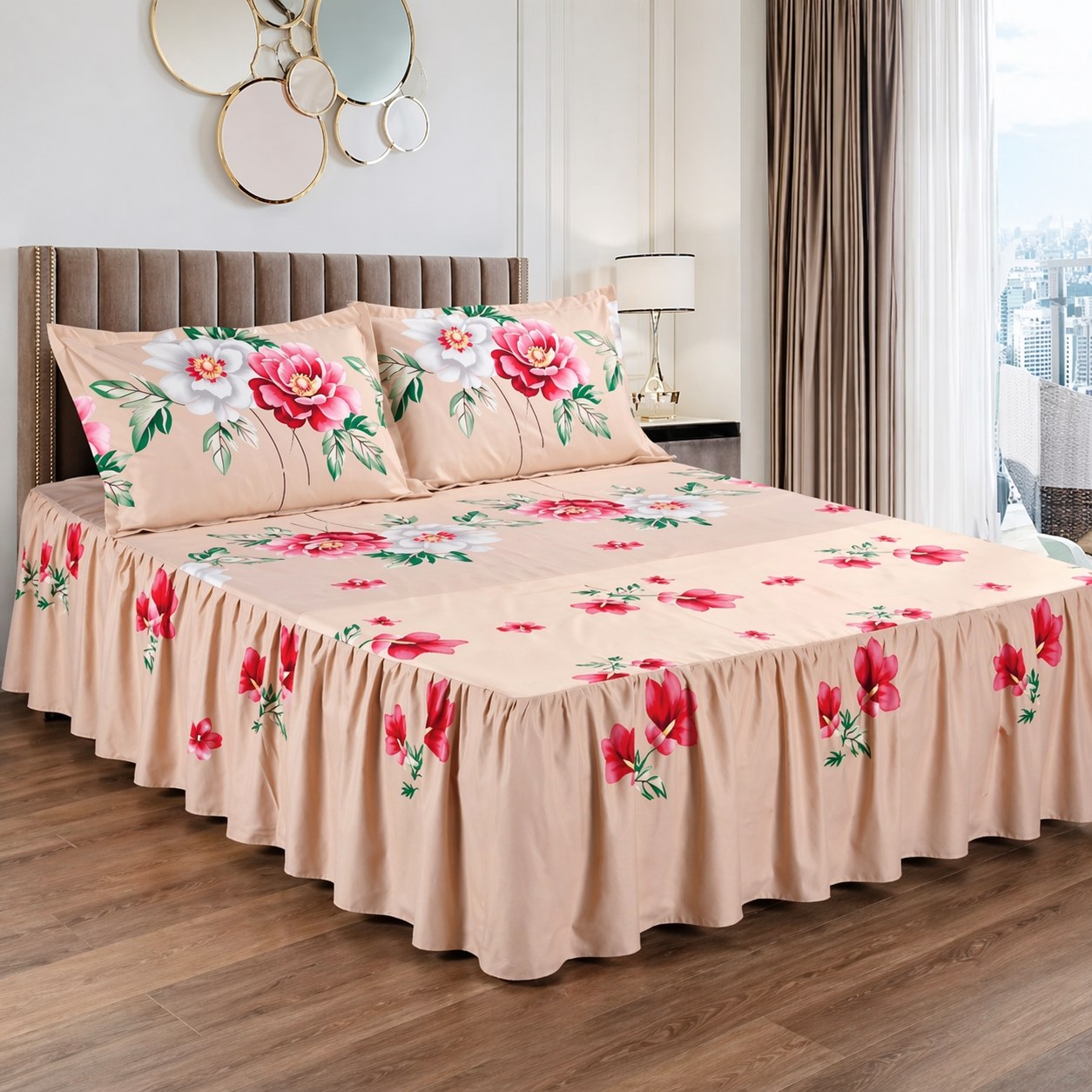
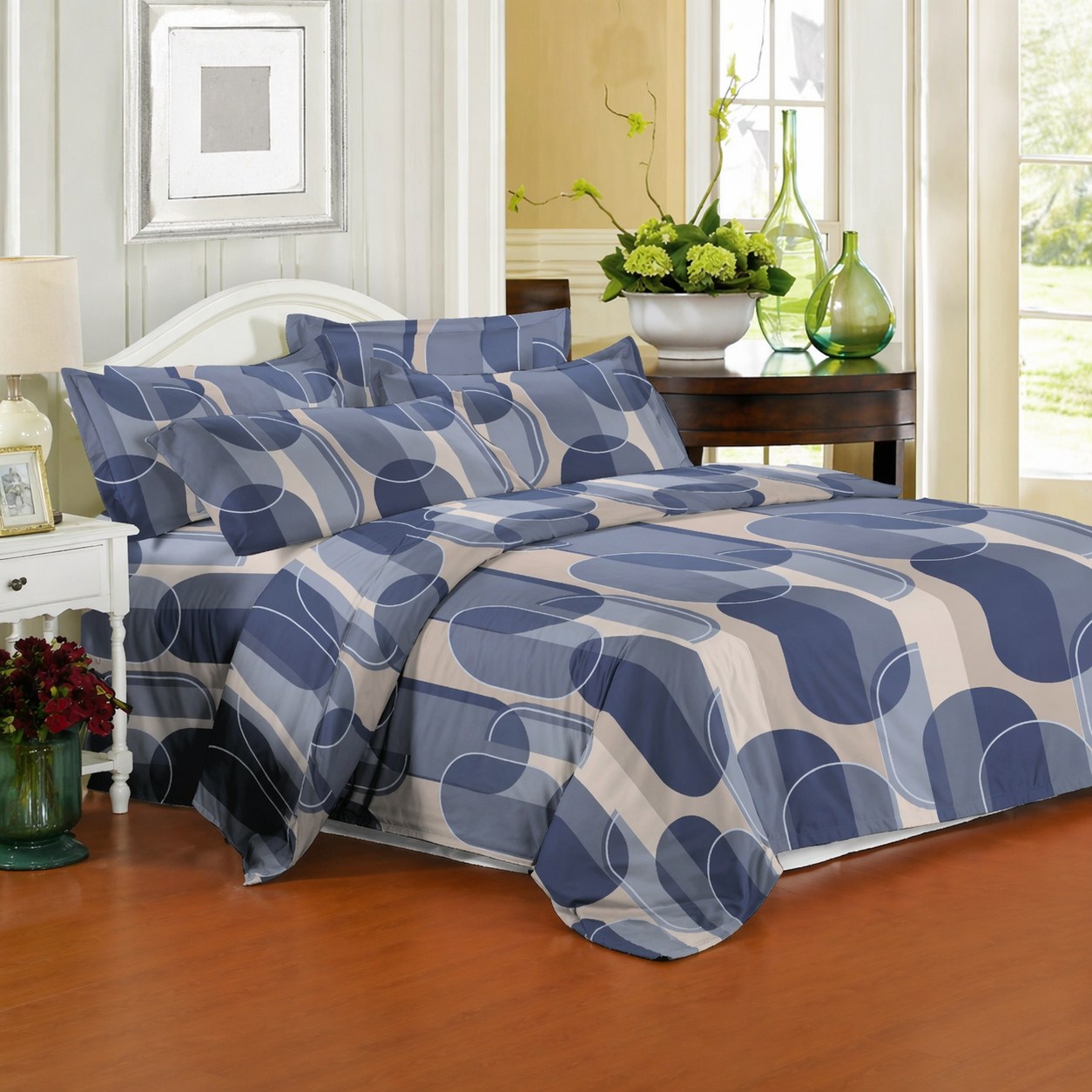
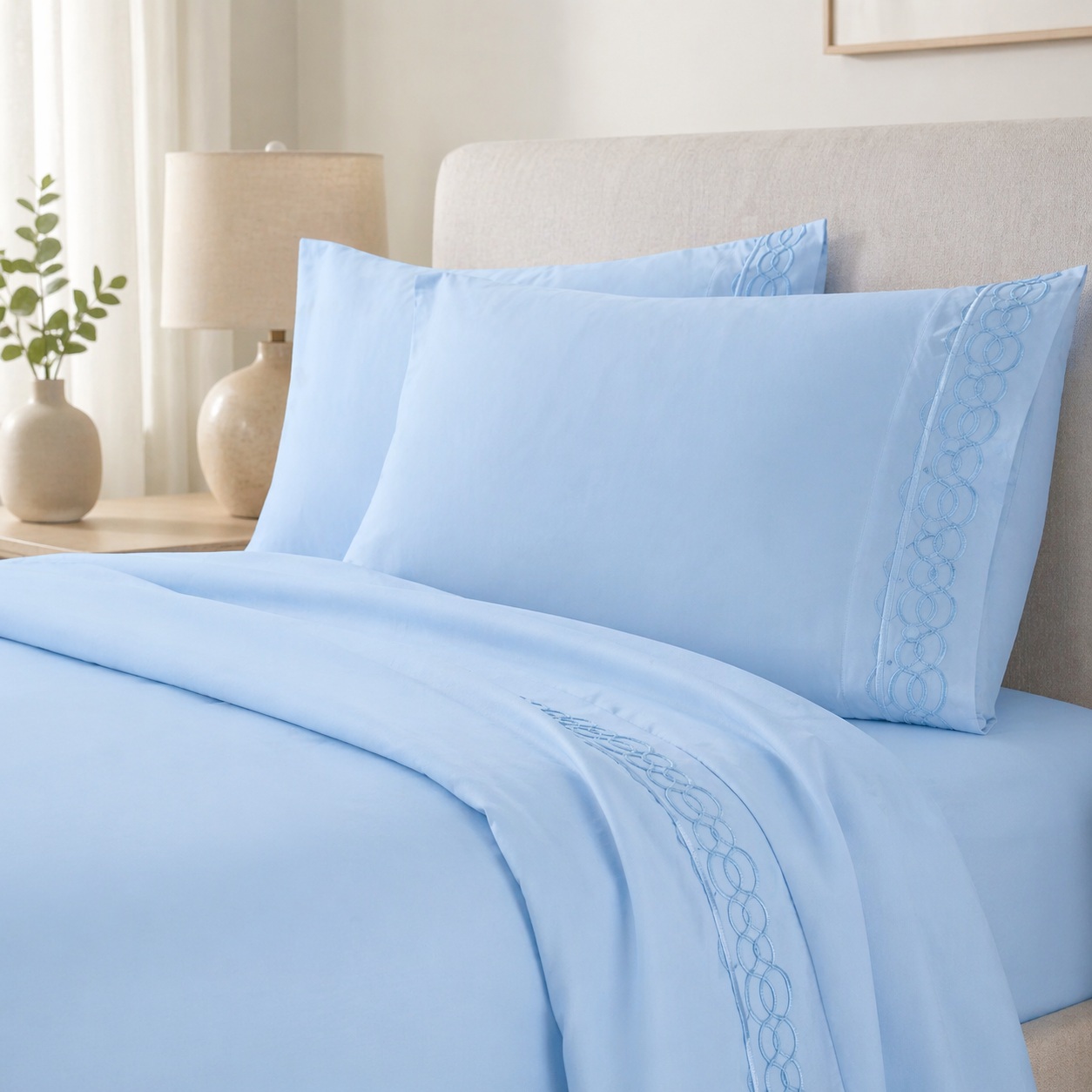
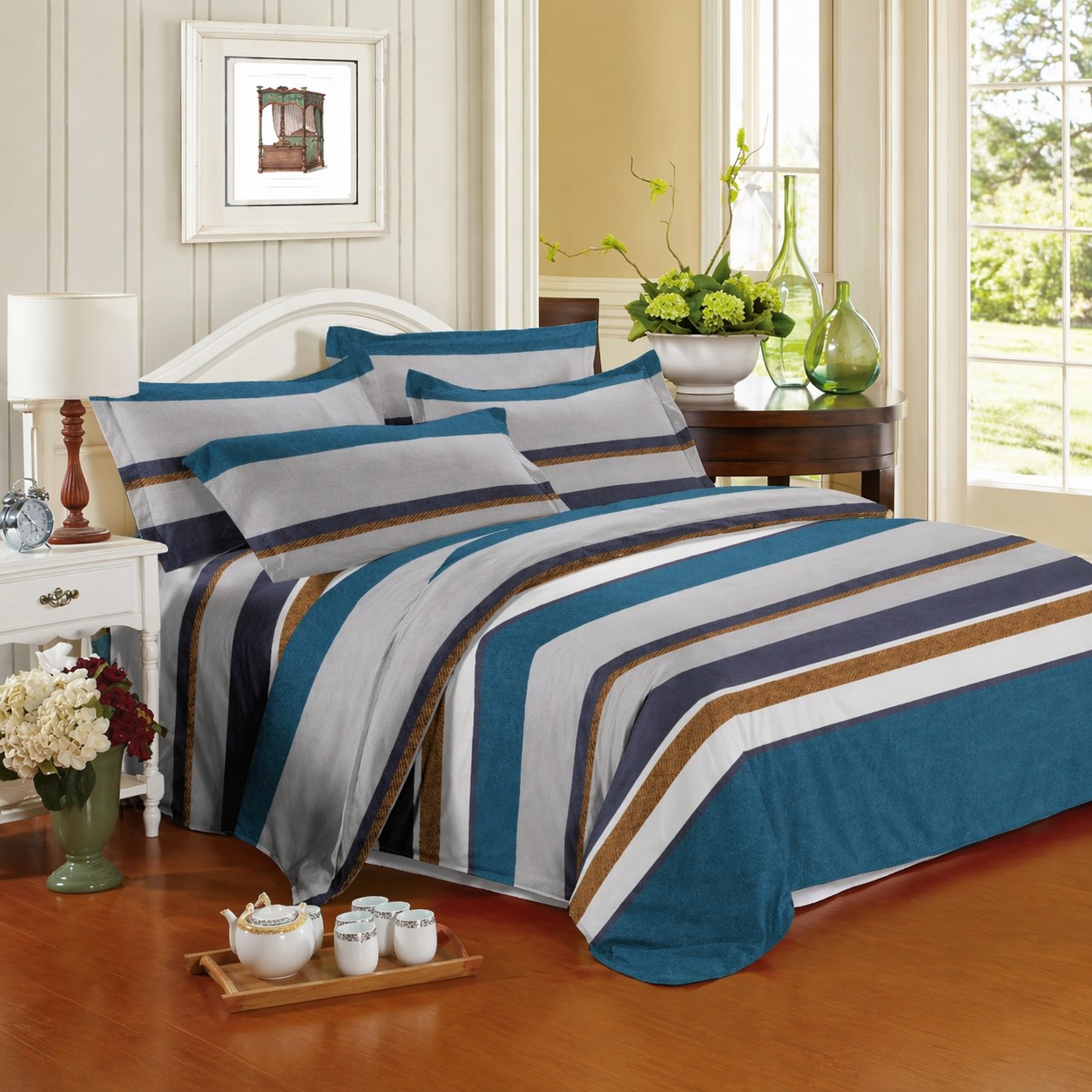
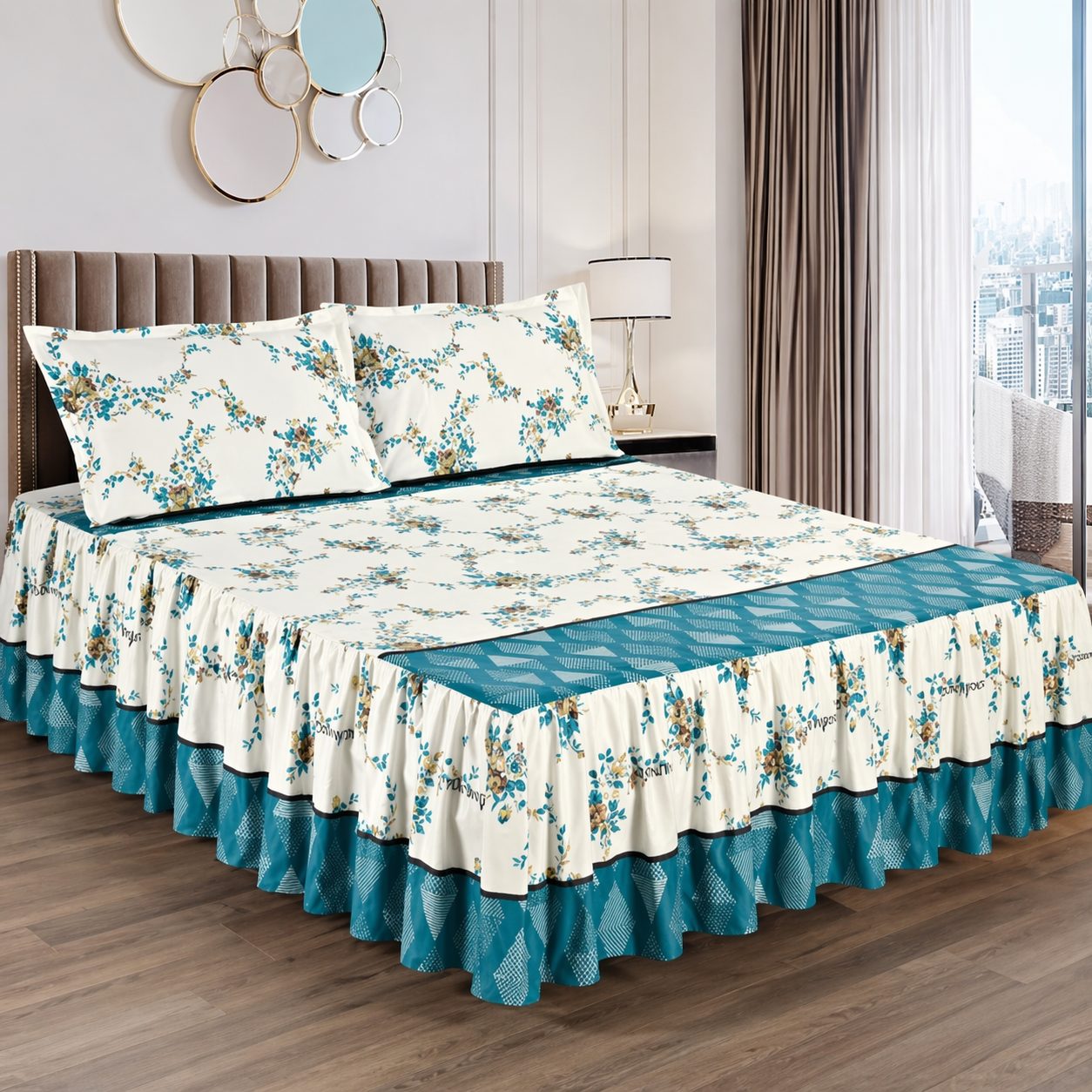
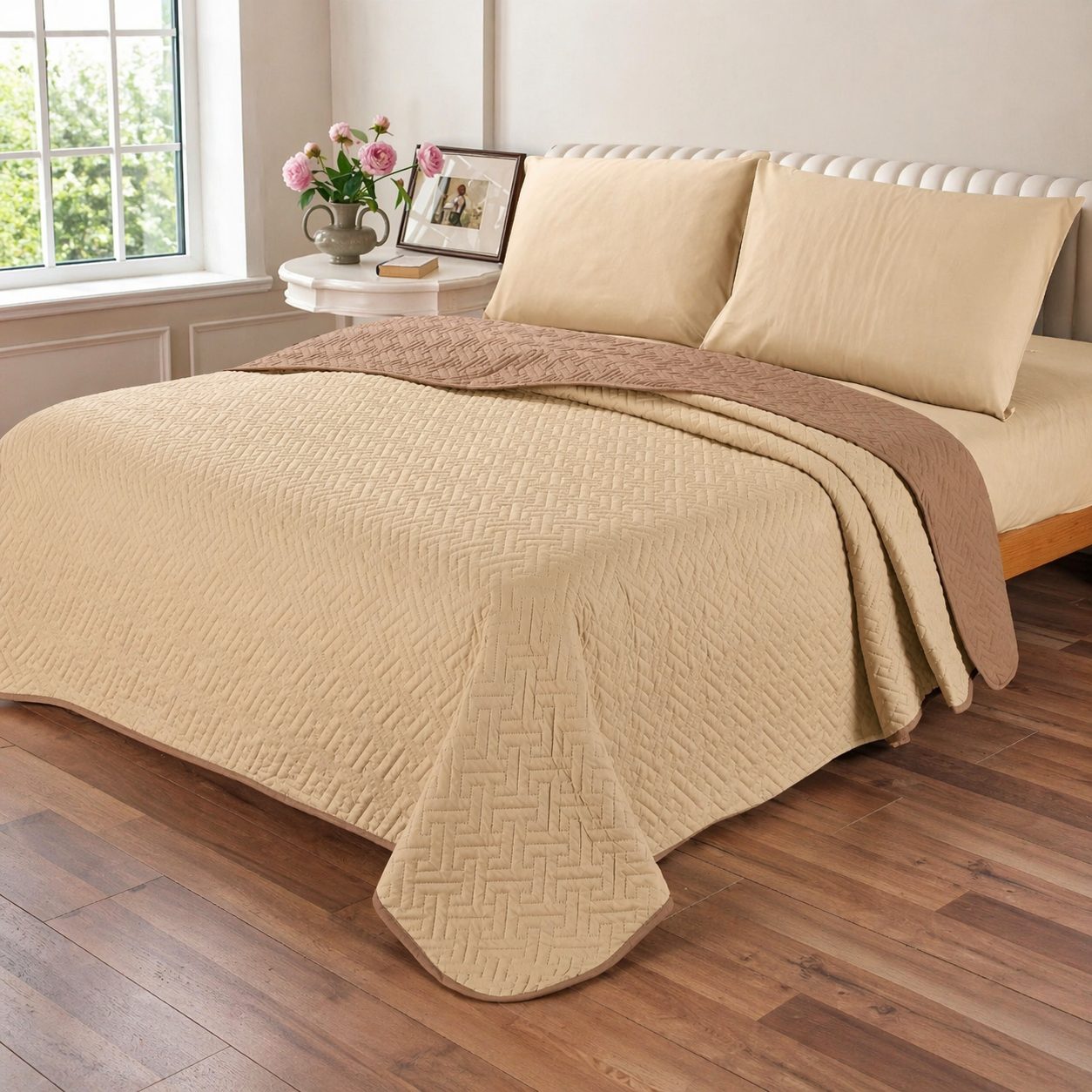
Selecting a bedding set is more than picking a fabric or a color. It is about matching the bedding set configuration to the functional needs of buyers, the stylistic expectations of different markets, and the production capacity of suppliers. A thoughtfully designed set can satisfy consumers, simplify production planning, and strengthen a brand’s credibility in both retail and hospitality sectors.
Markets vary widely across the world. In some regions, space and budget limitations make compact, functional sets more popular. In others, buyers prefer layered, coordinated, or decorative sets to create a visually complete bedroom. Paying attention to these differences ensures that suppliers and retailers provide products that resonate with their target audiences.
Standard Bedding Set Types
Bedding sets are typically organized into standard configurations: 4-piece, 5-piece, 6-piece, and 8-piece. These configurations exist because they balance buyer expectations, production efficiency, and perceived value.
-
4-Piece Sets: Include a fitted sheet, flat sheet, and two pillowcases. These are ideal for standard bed sizes such as twin, full, and queen. In markets focused on practicality and affordability, such as student housing, rental apartments, or entry-level retail, 4-piece sets dominate. They simplify production, reduce packaging costs, and provide a complete set for buyers without extras.
-
5-Piece Sets: Add a decorative pillowcase or small accent pillow to the standard four pieces. Popular in urban markets, these sets offer a modest upgrade for buyers seeking both utility and style. Retailers use them to attract customers who want small decorative elements without committing to larger, premium configurations.
-
6-Piece Sets: Comprise the four standard pieces plus two decorative shams or cushions. These sets are well-suited for boutique hotels, mid-to-high-end retail, and urban apartments where coordinated décor is valued. Buyers appreciate the flexibility to mix and match elements while maintaining a polished bedroom appearance.
-
8-Piece Sets: Include bed skirts, extra shams, or decorative cushions along with the standard components. These sets cater to premium and gifting markets, or regions where layered bedding is culturally expected. Offering 8-piece sets demonstrates a supplier’s ability to produce comprehensive, high-quality solutions suitable for retail or hospitality applications.
These standard configurations provide a consistent framework that buyers recognize, allowing them to make purchase decisions quickly while giving suppliers a predictable production model.
Sizes and Customization for Different Markets
Bedding set sizes vary by region, and offering customization enhances market reach. Standard mattress dimensions—Twin, Full, Queen, King, and California King—cover most needs, but many buyers request custom sizes for boutique hotels, specialty furniture, or unique room layouts.
Factories that accommodate both standard and custom dimensions gain an advantage, serving high-value clients and increasing order flexibility. Customization also allows differentiation in saturated markets, positioning a supplier as capable of meeting exact specifications.
Material choices further influence buyer preferences. Cotton, linen, polyester blends, or specialty fabrics differ in feel, durability, and maintenance, with regional preferences driving selection. North American buyers may prioritize soft, high-thread-count cotton, while Asian urban apartments often favor polyester blends for easy care.
Large buyers, such as hotels and resorts, may place bulk orders of standard sizes, while small-scale boutique buyers may request mixed configurations. Efficient inventory and production planning ensure suppliers meet these diverse needs without overstocking or delayed deliveries.
| Set Type | Typical Pieces | Popular Markets | Notes |
|---|---|---|---|
| 4-Piece | Fitted sheet, flat sheet, 2 pillowcases | North America, Europe | Entry-level, cost-efficient |
| 5-Piece | Adds a decorative pillow or case | Urban households | Slight upgrade, moderate value |
| 6-Piece | Adds 2 shams/cushions | Mid-to-high-end markets | Coordinated décor, flexible styling |
| 8-Piece | Includes bed skirt, extra shams | Premium, gifting markets | Full styling, luxury appeal |
Market Preferences and Regional Differences
Markets show distinct trends influenced by bedroom size, cultural habits, and lifestyle.
-
North America: Larger bedrooms support Queen and King sets. 4- and 5-piece configurations dominate entry-level and mid-market segments, while 6- and 8-piece sets serve luxury buyers or boutique hotels. Neutral colors are favored for flexibility and rental use.
-
Europe: Double and King beds are standard. Buyers favor minimalistic sets with fewer decorative elements. 4- and 6-piece configurations are most common, balancing functionality with aesthetic appeal. High-end buyers may request higher thread counts or premium fabrics.
-
Asia: Compact bedrooms drive demand for smaller sets like Twin and Full. Urban consumers increasingly seek coordinated decorative elements, with 5- and 6-piece sets gaining popularity. Functional durability often outweighs luxurious materials in daily use.
-
Middle East: Luxury aesthetics dominate. Layered bedding and decorative items are expected. 6- and 8-piece sets perform well, with high thread counts and premium fabrics common. Buyers prioritize style and comprehensive coordination.
-
Latin America: Preferences vary widely, but 4- and 6-piece sets are common in urban areas. Consumers often balance cost and appearance, with medium-quality fabrics and simple decorative elements preferred.
Suppliers who tailor their offerings to these regional expectations can reduce returns, satisfy consumers, and optimize inventory for multiple markets.
Decorative and Functional Elements
Beyond sheets and pillowcases, decorative and functional elements shape buyer decisions.
-
Pillow Shams: Add style without increasing bed footprint, particularly important in small bedrooms.
-
Bed Skirts: Improve presentation and conceal under-bed storage, appealing to premium buyers.
-
Decorative Cushions: Included in 5- to 8-piece sets, they enhance perceived value.
-
Material and Maintenance: Buyers select cotton, linen, or polyester blends based on touch, durability, and ease of cleaning.
Strategic inclusion of these elements aligns products with buyer expectations, especially in high-end and hospitality markets. Proper design also supports online retail by allowing buyers to visualize fully styled bedrooms.
Choosing Bedding Set Types for Different Markets
Selecting bedding set types involves several factors, balancing buyer needs, production capacity, and market expectations:
-
Target Market and Bedroom Size: Smaller bedrooms favor 4-piece sets; luxury buyers expect 8-piece sets.
-
Regional Bed Sizes: Aligning set dimensions with market-standard mattress sizes reduces returns and improves buyer satisfaction.
-
Aesthetic and Functional Expectations: Decorative elements, color coordination, and fabric quality influence perceived value and appeal.
-
Order Patterns and Volume: Hotels and rental properties prefer bulk standard sets; e-commerce retail favors smaller, styled sets with decorative options.
-
Production and Logistics: Factories must manage multiple configurations efficiently, offering flexibility without slowing production or delivery times.
-
Material Selection: High-quality fabrics, thread count, and durability affect market positioning, pricing, and buyer perception.
-
Seasonal and Trend Awareness: Bedding color, pattern, and fabric trends influence marketing and stock planning. Retail buyers often follow seasonal trends, whereas hotels prefer timeless designs.
By combining these factors, suppliers can strategically offer products that meet the expectations of diverse markets, from budget-conscious consumers to high-end boutique buyers.
Market Trends and Emerging Patterns
Global bedding markets are shaped by broader trends:
-
Sustainability: Demand for eco-friendly fabrics and recyclable packaging is rising, especially in Europe and North America.
-
Urbanization: Smaller living spaces in Asia and Latin America drive demand for compact, efficient sets.
-
Luxury and Customization: Affluent consumers increasingly expect high-thread-count fabrics, custom sizes, and coordinated décor.
-
E-Commerce Growth: Online retail encourages flexible configurations, multi-piece sets, and direct-to-consumer purchasing, increasing the importance of visually appealing products.
Suppliers who monitor these trends can adjust product lines to capture demand, anticipate shifts, and maintain competitiveness.
The configuration of the bed is pivotal in addressing consumer desires while also ensuring effective production. By focusing on common standards, providing customization options, and taking into account specific preferences in the market, suppliers can create solutions that appeal to multiple regions. Thoughtful design of the elements that are decorative and functional increases the perceived value of the product, while following trends and local rules increases the marketability of the product.