
Introduction
If you’ve ever pulled a cotton sheet from the dryer only to find it wrinkled or shrunken, you know the frustration. Cotton feels great but demands ironing, shrinks easily, fades, and can be costly.
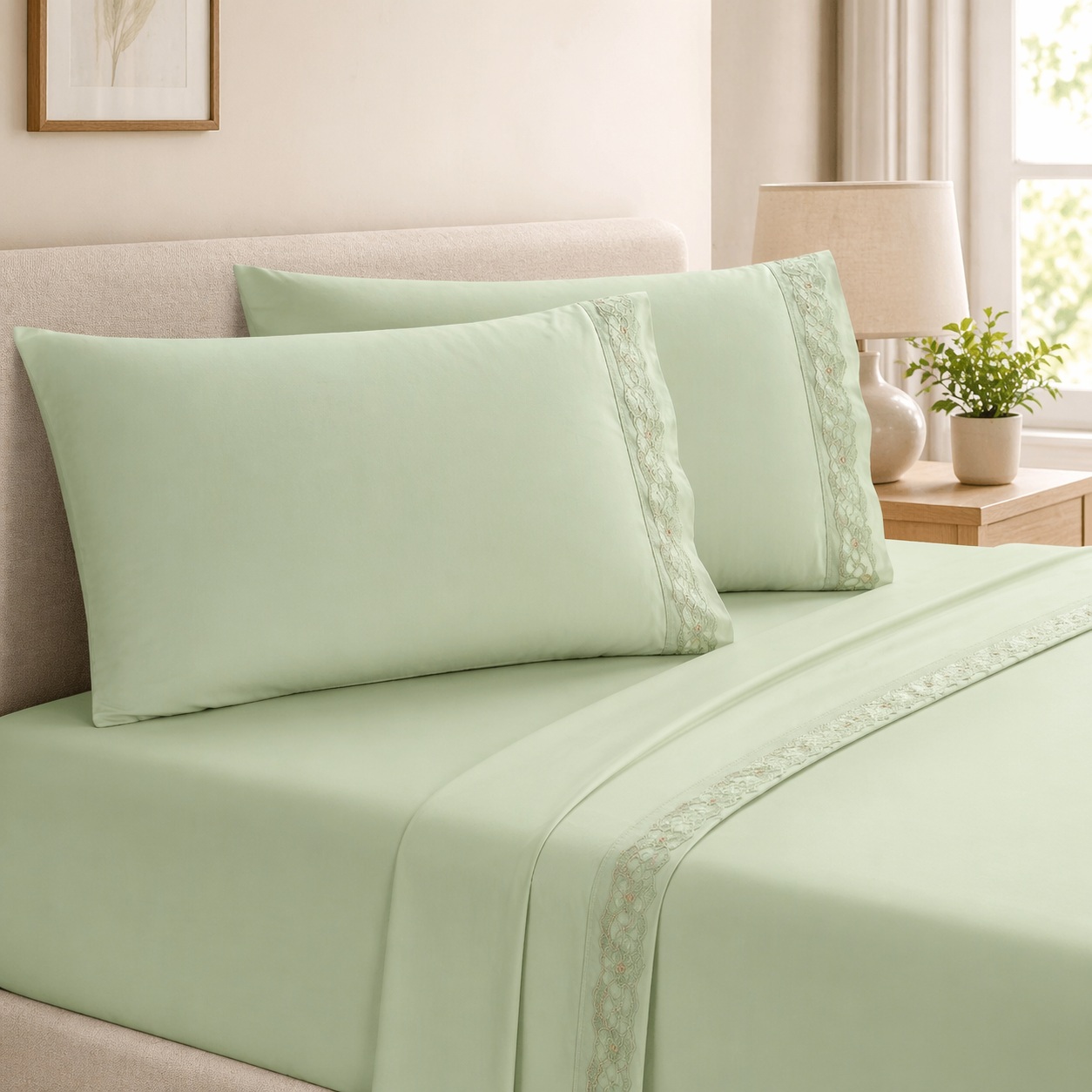
Imitation cotton embroidered bedding offers a practical alternative. It looks and feels like cotton but resists wrinkles, holds its shape, and keeps embroidery crisp wash after wash.
Valued at approximately USD 85 billion in 2026 and projected to reach USD 115 billion by 2031, the global bedding market favors products that combine style and easy care. This bedding delivers exactly that—beauty without the hassle.
In this article, we’ll explore what imitation cotton embroidered bedding is, how it compares to cotton, and who will benefit most from it.
Understanding Imitation Cotton: What Is It Exactly?
Before we can compare imitation cotton embroidered bedding to real cotton, we need to understand what the fabric base is made of and how it works.
What Is Imitation Cotton Fabric?
Imitation cotton—often called super imitation cotton in the textile industry—currently refers mainly to differentiated polyester products that are engineered to mimic the look, feel, and comfort of cotton fibers. The name “imitation cotton” does not mean it is a cheap knockoff. It means it is a carefully designed synthetic fabric that replicates the desirable qualities of cotton while overcoming cotton’s well-known weaknesses.
How it is made (simple version):
-
Air-texturing: Manufacturers use air to blow filaments into an irregular, intertwined structure that creates bulkiness and softness similar to cotton.
-
Three-dimensional curling: Different raw materials are combined to form naturally curled fibers.
-
Surface modification: Fine denier filaments increase surface area, and hydrophilic grooves can be added to improve moisture absorption.
The result is a fabric that, in the words of one textile expert, “looks like cotton (visual), feels like cotton (tactile), wears like cotton (compatibility), and is more convenient to use than cotton (wearability).”
But here is the crucial part. Imitation cotton embroidered bedding is not trying to be the same as cotton. It is trying to be better in the ways that matter to modern consumers—wrinkle resistance, durability, shape retention, and ease of care.
What Regular Cotton Bedding Does Well (And Where It Falls Short)
Cotton has been the dominant material for bedding for centuries, and for good reason. But let us be honest about both sides.
Cotton’s Strengths
| Strength | Why It Matters |
|---|---|
| High breathability | Air circulates freely, helping regulate body temperature |
| Excellent moisture absorption | Wicks sweat away from the body |
| Softness improves with washing | Becomes smoother over time |
| Hypoallergenic | Generally safe for sensitive skin |
| Natural and renewable | Biodegradable, no synthetic chemicals |
Cotton’s Weaknesses (The Real Frustrations)
-
Wrinkles easily. Pull cotton sheets from the dryer, and they look like crumpled paper. Ironing is almost mandatory for a crisp look.
-
Shrinks noticeably. A fitted sheet that fits perfectly out of the package can become too tight after just one warm-water wash.
-
Fades over time. Vibrant colors look washed out after repeated laundering.
-
Pills and wear faster than synthetic alternatives, especially with frequent washing.
-
Requires delicate care. Avoid hot water, harsh detergents, and high-heat drying to maintain appearance.
-
Costs more. A decent cotton sheet set ranges from 50 to 150+, depending on thread count and quality.
One bedding comparison site put it bluntly: real cotton is softer and breathes better, but it demands more work. For many busy households, that work is no longer worth it.
What Makes Imitation Cotton Embroidered Bedding Different?
Now, let us focus on the alternative. Imitation cotton embroidered bedding combines two distinct elements: the imitation cotton fabric base and the embroidery detailing. Each contributes something valuable.
The Fabric Base: Imitation Cotton (Polyester Engineered)
The foundation is made from specially engineered polyester fibers designed to capture the best qualities of cotton while eliminating the worst.
Key features of the fabric:
| Feature | What It Means for You |
|---|---|
| Wrinkle resistance | Comes out of the dryer looking crisp—no ironing needed |
| Wear resistance | Holds up to frequent washing without pilling |
| Deformation resistance | Keeps its shape, no shrinkage |
| Color stability | Stays vibrant wash after wash |
| No lint or pilling | Looks new longer |
| Good moisture drainage | Wicks moisture away and releases it quickly |
From a textile expert: “Compared to cotton fiber fabrics, super imitation cotton has better wrinkle resistance, wear resistance, deformation resistance, stable coloring, no pilling, and no lint, making it a high-end fabric that is easier to care for.”
The fabric has a soft, gentle touch. The trade-off is that it is generally less breathable than pure cotton. Imitation cotton embroidered bedding prioritizes durability and ease of care over maximum airflow. For most people, this is an acceptable trade-off for the convenience.
The Embroidery Detailing
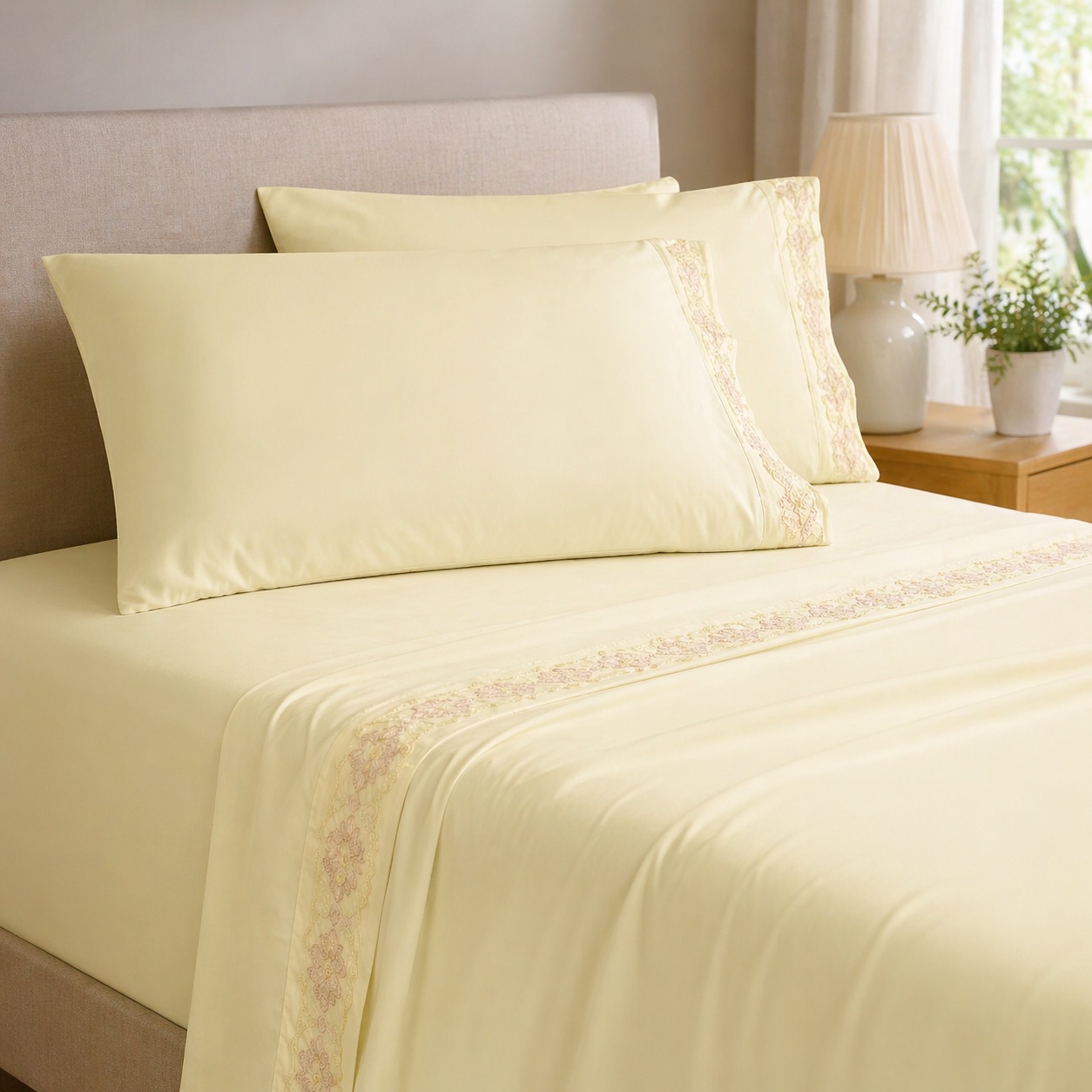
Embroidery is not just decoration. It is a structural part of the bedding that adds lasting beauty.
Why embroidery matters:
-
Built-in design. Stitching is woven into the fabric, not printed on the surface.
-
No peeling or cracking. Unlike printed patterns that degrade over time.
-
Dimensional texture. Raised stitching creates subtle shadows and highlights.
-
Longevity. Product lifecycle testing shows well-maintained embroidered bedding maintains about 85% of its original luster and stitch integrity after 200 wash cycles.
One bedding expert notes that “embroidery’s upfront savings and durability quickly justify its investment when you factor in years of use without significant wear.”
The one risk? Embroidery can snag on pet claws, jewelry, or rough handling. For households with cats that knead bedding or young children, this is worth considering.
The Combined Package
When you put imitation cotton fabric together with embroidery, you get something specific. The synthetic base provides structural stability that helps the embroidery maintain its shape. The fabric does not shrink or stretch unpredictably, so the embroidered pattern stays exactly where it was designed to be.
The result is bedding that looks crisp, stays crisp, and requires far less maintenance than cotton alternatives. This is the core promise of imitation cotton embroidered bedding.
Side-by-Side Comparison: Imitation Cotton Embroidered Bedding vs. Real Cotton
To help you see the differences clearly, here is a detailed comparison based on real-world bedding performance data.
| Feature | Imitation Cotton Embroidered Bedding | Real Cotton Bedding |
|---|---|---|
| Material | Polyester blends engineered to mimic cotton | 100% natural cotton fibers |
| Breathability | Medium—adequate airflow | High—excellent ventilation |
| Moisture absorption | Good (engineered with moisture channels) | Very good—absorbs well but slow to release |
| Initial softness | Very soft | Medium (softens with washing) |
| Softness over time | Maintains well | Improves, but can pill |
| Durability | High—resists pilling and fading | Good—can wear out faster |
| Wrinkle resistance | Excellent—comes out crisp | Fair—requires ironing |
| Shrinkage | Minimal to none | Prone to shrinkage |
| Color retention | Excellent—stays vibrant | Good—fades over time |
| Embroidery longevity | Excellent—stable base | Good—can distort if fabric shrinks |
| Care requirements | Machine wash, low maintenance | Delicate—avoid hot water and high heat |
| Price range | Budget-friendly (30–80) | Moderate to high (50–150+) |
| Environmental impact | Synthetic, less biodegradable | Natural, biodegradable |
The honest takeaway: Real cotton wins on breathability and natural fiber appeal. Imitation cotton embroidered bedding wins on convenience, durability, and affordability. One bedding comparison site said it well: “Both materials are suitable for different kinds of sleepers and budgets.”
Who Should Choose Imitation Cotton Embroidered Bedding?
Imitation cotton embroidered bedding offers practicality, style, and durability. Here’s who benefits most:
1. Budget-Conscious Shoppers
Looking for attractive, comfortable bedding without overspending?
Imitation cotton embroidered bedding is more affordable than comparable cotton sets and ideal for guest rooms, rental properties, or first apartments.
2. People Who Hate Ironing
Wrinkle resistance is real. Sheets come out of the dryer neat, no ironing needed. Perfect for busy evenings when you don’t want to wrestle with an ironing board.
3. Families with Children and Pets
Frequent washing is unavoidable with kids or pets. This bedding resists pilling, fading, and maintains shape, making it perfect for everyday use.
4. Rental Property Owners and Hotels
Low-maintenance bedding that stays attractive. Quick-drying, stain-resistant, and durable—reducing complaints about shrinkage or wrinkles from guests.
5. Decorators Who Appreciate Detail
Embroidery adds texture and premium appeal. Subtle stitched patterns elevate any room without a high price tag, giving a sophisticated look that printed designs can’t match.
Who Might Prefer Real Cotton?
- Hot sleepers who need maximum breathability
- Purists who avoid synthetic fibers for environmental reasons
- Users willing to handle higher maintenance for softer bedding over time
For these users, imitation cotton embroidered bedding may not be the best choice—and that’s fine. Different products suit different needs.
The Embroidery Advantage
Embroidery adds value beyond fabric quality:
- Longevity: Threads are woven into the fabric, resisting fading or peeling over time.
- Premium Look: Elevates a budget-friendly set to look luxurious.
- Customization: Perfect for businesses—logos, monograms, or personalized designs without extra labels.
Tip: Embroidered patterns may snag on jewelry, pet claws, or rough handling, so handle with care.
How to Care for Imitation Cotton Embroidered Bedding
Proper care extends the life of any bedding. Here are simple guidelines.
Washing:
-
Machine wash cold or warm (gentle cycle)
-
Turn inside out to protect embroidery threads
-
Use mild detergent—no bleach, no fabric softener
Drying:
-
Tumble dry on low
-
Remove promptly—wrinkles are minimal anyway
-
Avoid high heat (can affect synthetic fibers over time)
Stain removal:
-
Spot-clean gently around embroidered areas
-
Do not scrub aggressively on the stitching
Expected lifespan: With proper care, quality imitation cotton embroidered bedding maintains about 85% of its original luster and stitch integrity after 200 wash cycles. That is years of normal use.
Market Trends: Why This Bedding Is Gaining Popularity
The bedding industry is evolving. Consumers are becoming more design-driven and value-conscious.
Key trends driving growth:
-
Time poverty. People have less time for ironing and delicate laundry routines.
-
Rental economy. More people live in apartments or rent out properties—durable, easy-care bedding wins.
-
Rising cotton prices. As cotton becomes more expensive, alternatives look more attractive.
-
Design democratization. Embroidery, once a luxury detail, is now accessible at lower price points.
Industry executives note that business is being fueled by “layered top-of-bed styling, elevated everyday luxury, and a consumer increasingly willing to invest in the bedroom as a personalized sanctuary.” At the same time, affordability remains a concern. Imitation cotton embroidered bedding sits in an interesting middle space—offering the visual appeal and durability of higher-end products at a more accessible price.
The bedding products market is projected to grow from USD 130.85 billion in 2025 to USD 172.85 billion by 2032. Within this expanding market, versatile, easy-care fabrics like imitation cotton are finding their place.
FAQ
1. Is imitation cotton embroidered bedding comfortable for daily use?
Yes. It is designed to feel soft and smooth against the skin, making it suitable for everyday use throughout the year. While it may feel slightly less cooling than premium natural cotton in very hot climates, most users find it comfortable for regular home use.
2. Does imitation cotton embroidered bedding hold up after repeated washing?
Yes. High-quality imitation cotton is engineered for durability and maintains its structure, color, and appearance even after frequent washing. It is widely used in homes, hotels, and rental properties because of its stable performance over time.
3. Can imitation cotton embroidered bedding be machine-washed and dried?
Yes. It is machine washable and dryer-friendly on low heat. Unlike traditional cotton, it is designed to resist shrinkage and deformation, helping the bedding maintain its original size and shape after washing.
4. How durable is the embroidery on imitation cotton bedding?
Well-made embroidery is highly durable and remains visually intact through long-term use. In typical testing, embroidery can retain most of its appearance even after hundreds of wash cycles, making it suitable for long-term household and commercial use.
5. Is imitation cotton embroidered bedding suitable for sensitive users?
It is generally suitable for most users, including those with mild sensitivity. However, because it is a synthetic-based fabric, individuals who strongly prefer natural fibers may choose cotton instead, depending on personal preference.
The Bottom Line
Choosing between imitation cotton embroidered bedding and real cotton comes down to knowing what you value most.
Choose real cotton if:
-
Breathability is your top priority (you sleep hot)
-
You prefer natural, renewable materials
-
You do not mind ironing and careful washing
Choose imitation cotton embroidered bedding if:
-
You want bedding that looks great without constant maintenance
-
You hate ironing and shrinking surprises
-
You wash sheets frequently (kids, pets, rentals)
-
You love embroidered details but want them to last
-
You are working with a tighter budget
Imitation cotton embroidered bedding delivers the visual appeal of cotton with the practicality of modern textile engineering. It resists wrinkles, holds its shape, keeps colors vibrant, and stands up to real life. In a world where time is increasingly valuable, that trade-off makes more and more sense.
Ready to explore imitation cotton embroidered bedding for your home or business? Request product specifications and sample swatches to see and feel the quality for yourself. Whether you are outfitting a guest room, stocking a rental property, or building a bedding collection, this versatile fabric offers a compelling balance of beauty, durability, and value.