
Introduction
Why do summer sheets not keep you cool? Millions of adults wake up sweaty and irritable in the morning, and thin cotton sheets often make matters worse because they trap moisture. The answer is Cooling Summer Quilt. This quilt is made from lightweight, breathable polyester and will keep your body cool. As demand for temperature-regulating bedding increases worldwide, a well-designed cooling quilt is no longer a luxury but an investment in better sleep.
What Actually Makes a Summer Quilt “Cooling”?
Walk into any bedding retailer, and you will see cooling comforters, cooling blankets, and cooling sheets everywhere. But the term “cooling” is applied loosely. Some manufacturers simply use thinner materials and call it a day. Others rely on marketing language about “breathable cotton” that, while technically true, does not actively move heat away from your body.
A genuine cooling summer quilt relies on two distinct mechanisms working together.
The first is contact cooling, measured by a textile industry metric called Q-max. Q-max quantifies how much heat transfers from your skin to the fabric the instant you touch it. The higher the Q-max value, the cooler the fabric feels on contact. Chinese national standards require a Q-max of at least 0.15 W/cm² to be classified as having cooling properties, while products aiming for genuine summer comfort often target values of 0.3 to 0.4 or higher. For reference, a cooling summer quilt with a Q-max of 0.4 typically feels approximately 2 to 5 degrees Celsius cooler to the touch than standard bedding.
The second mechanism is moisture management and breathability. Contact cooling provides the initial sensation of coolness, but that feeling fades quickly if the fabric traps heat and humidity. A breathable cooling summer quilt allows air to circulate through the fibers while actively wicking moisture away from your skin, preventing that clammy, sticky feeling that ruins sleep on hot nights.
The most effective cooling summer quilt options on the market combine both mechanisms using engineered polyester fabrics rather than natural fibers alone.
Polyester Cooling Technology: Why It Works Better Than You Might Think
There is a common assumption that natural fibers like cotton are automatically more breathable than synthetics. That is true in some contexts—cotton does allow good airflow. But for active cooling and moisture management, modern polyester fabrics have significant advantages that older generations of synthetic bedding simply did not have.
The key lies in fiber engineering. Standard polyester fibers are round and smooth, which limits their ability to move moisture. But cooling-specific polyester fabrics use special cross-section fiber shapes—Y-shaped, cross-shaped, W-shaped, or star-shaped profiles that create microscopic channels along the fiber surface. These channels draw moisture away from the skin through capillary action, spreading it across a larger surface area where it can evaporate quickly.
Tests have demonstrated that certain 100% polyester cooling fabrics can evaporate humidity up to three times faster than untreated polyester at 35°C (95°F). That rapid evaporation is what keeps you dry instead of sweaty.
Importantly, a well-constructed cooling summer quilt uses polyester in both the shell fabric and the filling. The shell provides the contact cooling effect via Q-max-engineered fabric. The filling—typically hollow or micro-denier polyester fibers—creates air pockets that trap just enough warmth to keep you from feeling cold when the AC kicks in, without the bulk and heat retention of traditional comforter fills.
Some innovative products have taken this further. One award-winning cooling comforter uses 30% hollow CASTOR fiber in its filling, achieving a structure that weighs only 70% of conventional summer quilts while maintaining high breathability and moisture absorption. Hollow fibers create additional air channels within the filling itself, further enhancing the quilt’s ability to breathe.
Comparing Cooling Summer Quilts to Traditional Bedding Options
To understand why a dedicated cooling summer quilt deserves a spot in your linen closet, it helps to see how it stacks up against the alternatives people typically reach for in warm weather.
Traditional cotton quilts: Cotton is breathable and soft. It absorbs moisture reasonably well. But cotton also holds onto that moisture rather than wicking it away quickly. A cotton sheet or quilt can become damp and heavy during a night of sweating, which feels unpleasant and can actually make temperature regulation worse as the wet fabric cools against your skin. Cotton also lacks the engineered fiber structures that give cooling polyester its rapid drying capability.
Thin microfiber blankets: These are lightweight and often inexpensive. But many microfiber blankets are not engineered for cooling specifically. Standard microfiber can trap heat because the fibers are densely packed, reducing airflow. A cooling summer quilt, by contrast, uses looser constructions and specialized fiber shapes to maintain breathability. Consumer reviews of standard microfiber comforters frequently note that while they feel soft, hot sleepers find them too warm for summer use.
Down or down-alternative comforters: Down provides excellent insulation, which is the opposite of what you want in summer. Down traps body heat efficiently—that is why it is prized for winter bedding. Some down-alternative comforters use synthetic fills that are cooler than natural down, but they still lack the contact cooling properties of a dedicated cooling summer quilt.
The closest competitor to a cooling summer quilt is a high-quality linen sheet or bamboo blanket. Both natural materials offer good breathability and moisture management. Bamboo fibers have thermal conductivity around 0.049 W/m·K, which supports cooling, and consumer data shows a 47% increase in bamboo textile purchases over conventional cotton since 2021.
However, linen and bamboo lack the engineered Q-max contact cooling that polyester provides. A cooling summer quilt delivers both the immediate cool sensation from Q-max fabric and the ongoing moisture management from engineered fibers—something no single natural fiber matches.
What to Look For in a Cooling Summer Quilt
Not every cooling summer quilt performs equally. Here are the specific features that separate effective products from marketing hype.
Check the Q-max rating. Look for a Q-max value of at least 0.3 W/cm² for noticeable contact cooling. Products rated 0.4 or higher will feel distinctly cooler to the touch. Some high-performance cooling summer quilts achieve Q-max values of 0.47, delivering an instant cool feeling up to 6°C below skin temperature. Beware of products that mention “cooling technology” but do not provide a Q-max number—there is no standardized way to evaluate their performance otherwise.
Verify the fiber type and construction. The shell fabric should be polyester specifically engineered for cooling, with fiber cross-sections designed to wick moisture. Do not assume that any polyester fabric works the same way—standard polyester can feel hot and plastic-like. Look for descriptions mentioning “wicking,” “moisture management,” or specific fiber technologies.
Check the filling. A hollow polyester fiber filling offers better breathability than solid fiber fills because the hollow core traps air without adding weight. Look for products that specify the filling composition.
Look for wash durability. The best cooling summer quilts maintain their cooling properties after repeated washing. Some products claim cooling effects remain effective even after 100 wash cycles, which indicates stable fiber engineering rather than a temporary chemical treatment that washes out.
Consider weight and thickness. A cooling summer quilt for hot sleepers should feel noticeably lighter than a standard comforter. Some weigh as little as 70% of conventional summer bedding materials. If it feels heavy or dense, it will trap heat regardless of the fabric technology.
Market Trends: Why Cooling Bedding Is Everywhere Right Now
The demand for cooling bedding has exploded in recent years, and the numbers explain why. The 2025 Cool Fabric Market Report shows global demand for cooling bedding growing at a compound annual rate of 9.1% in the Asia-Pacific region alone, with demand expanding from traditional markets like Australia and Europe to warmer regions worldwide.
In Korea, one company’s contact cooling bedding line sold out completely during a 2025 heat wave, with restocks not expected until 2026. On Chinese e-commerce platforms like Tmall, cooling pillows and cooling blankets have seen double-digit year-over-year growth, ranking among the top sleep products for summer.
This is not just seasonal hype. Cooling bedding has transitioned from a summer-specific niche to a year-round category. Smart textile technologies specifically designed for sleep enhancement—including temperature-regulating fabrics—are expanding rapidly, with the smart textiles segment projected to grow from USD 7.46 billion in 2025 to USD 9.61 billion in 2026 alone.
The driver is simple: consumers have realized that sleeping hot is not something they have to tolerate. Some products actually solve the problem rather than just mitigating it. And as global average temperatures continue to rise, the need for effective cooling bedding will only become more pronounced.
Night Sweats vs. General Warmth: Does a Cooling Quilt Help Both?
There is an important distinction worth making. Some people sleep warm because their bedroom temperature is too high or their bedding is too heavy. Others experience true night sweats—episodes of excessive sweating during sleep that can soak through pajamas and sheets, often caused by hormonal changes, medications, or underlying health conditions.
A cooling summer quilt helps in both scenarios, but the mechanism differs.
For general warmth, the quilt’s breathability and moisture-wicking properties prevent heat buildup while still providing a light layer of comfort. The contact cooling effect makes getting into bed more pleasant on hot nights.
For night sweats, the moisture management is critical. Standard bedding absorbs sweat but stays wet, leading to that unpleasant cold-damp feeling when the sweating episode ends. A cooling summer quilt wicks moisture away from the skin rapidly and allows it to evaporate, keeping the surface dry even if the sweating is profuse. One reviewer of a similar cooling product noted that, as someone who experiences night sweats, switching to cooling bedding was transformative—the fabric moved moisture more effectively than cotton could on its own.
If night sweats are severe and persistent, definitely consult a doctor. But for the vast majority of people who simply run hot while sleeping, a quality cooling summer quilt makes an immediate and noticeable difference.
How to Use a Cooling Summer Quilt for Best Results
Like any bedding product, a cooling summer quilt performs best when used correctly.
Use it alone in summer. Do not layer it over another blanket or comforter—that defeats the purpose. The quilt is designed to provide the right amount of coverage without additional insulation.
Pay attention to your sheets. The cooling summer quilt can only regulate temperature effectively if the sheets underneath also breathe. Pair it with lightweight cotton or bamboo sheets rather than flannel or high-thread-count sateen, which can trap heat.
Wash it properly. Most cooling summer quilts are machine-washable, but avoid fabric softeners. Softeners coat fibers and can reduce moisture-wicking performance. Use a gentle cycle and low heat drying or air drying when possible.
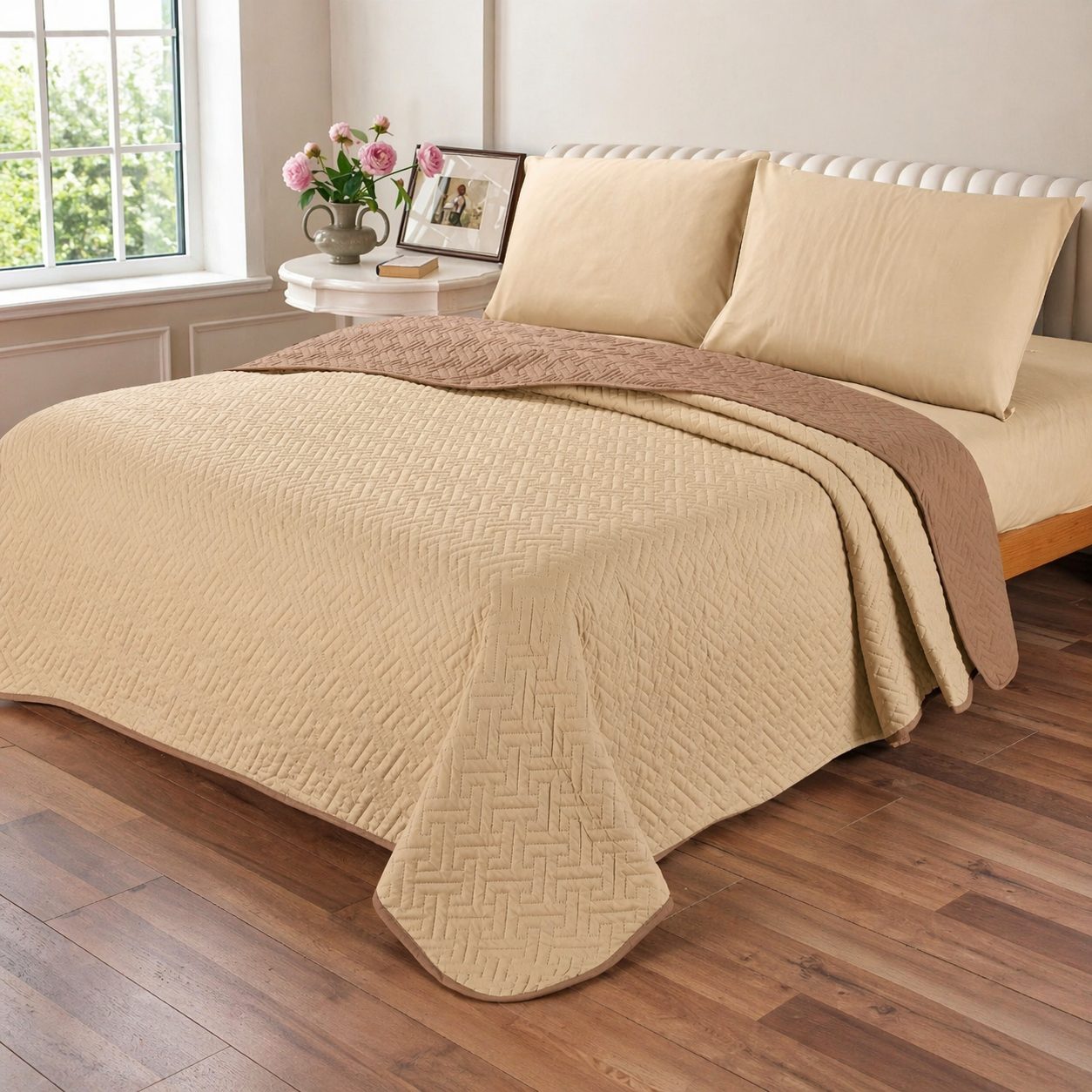
Consider a reversible design. Some cooling summer quilts feature different fabrics on each side—one optimized for cooling, the other slightly warmer for transitional seasons. A double-sided design gives you more flexibility as temperatures change throughout the summer or if your partner prefers different warmth levels.
A Real-World Comparison
To make the differences concrete, here is how a quality cooling summer quilt compares to standard bedding options across the metrics that actually matter for hot sleepers:
-
Initial coolness (touch sensation): Cooling summer quilt—high (Q-max 0.3 to 0.5+). Cotton quilt or sheet—low to moderate. Microfiber blanket—low. Down comforter—very low.
-
Moisture wicking: Cooling summer quilt—excellent (engineered fiber channels). Cotton—moderate (absorbs but wicks slowly). Microfiber—poor to moderate, depending on construction. Down—poor.
-
Breathability (airflow): Cooling summer quilt—high. Cotton—high. Microfiber—low to moderate. Down—low.
-
Weight: Cooling summer quilt—lightweight. Cotton quilt—light to medium. Down comforter—medium to heavy.
-
Durability of cooling effect: Cooling summer quilt—permanent (fiber engineering). Other options—N/A or temporary.
FAQ
Q1:Does a cooling summer quilt actually work for people who sweat heavily at night?
Yes. Engineered polyester fibers with cross-section channels wick moisture away from skin rapidly, unlike cotton, which absorbs and stays wet. Many users report waking up dry instead of soaked.
Q2:Can I use a cooling summer quilt if my partner sleeps cold?
Consider a reversible quilt with different fabrics—cooling on one side, warmer on the other. Or use individual quilts. The cooling effect only works where skin touches the fabric.
Q3:How many washes before the cooling effect wears off?
Quality cooling summer quilts rely on permanent fiber engineering, not chemical coatings. The best maintains cooling properties for over 100 wash cycles. Avoid fabric softeners, which coat fibers and reduce performance.
Q4:What Q-max value should I look for?
Aim for at least 0.3 W/cm² for noticeable coolness. Values of 0.4 or higher feel distinctly cooler—up to 6°C below skin temperature. Skip products that don’t provide a Q-max number; there’s no other reliable standard.
Q5:Is a cooling summer quilt only for summer?
No. Many are designed for year-round use. Hollow polyester filling provides light insulation that works in air-conditioned rooms and transitional seasons. Some models have different fabrics on each side for seasonal versatility.
The Bottom Line
Waking up sweaty and restless doesn’t have to be your summer norm. A Cooling Summer Quilt, engineered with Q-max fabrics, hollow polyester fibers, and moisture-wicking structures, provides immediate coolness, continuous breathability, and rapid drying—performance that traditional cotton or microfiber bedding cannot match.
The trend is clear: consumers across Asia, Europe, and North America are shifting to functional cooling bedding. With the global cooling bedding market growing nearly 10% annually in some regions, these quilts are improving in both technology and design, offering real solutions to night sweats and uncomfortable sleep.
If nightly overheating disrupts your rest, it’s time to upgrade. The right Cooling Summer Quilt can transform summer sleep from a struggle into a refreshing experience. Explore Nantong Qianting Textile’s range of customizable quilts—request samples, review technical data, or discuss bulk orders to find the perfect solution for your market.