
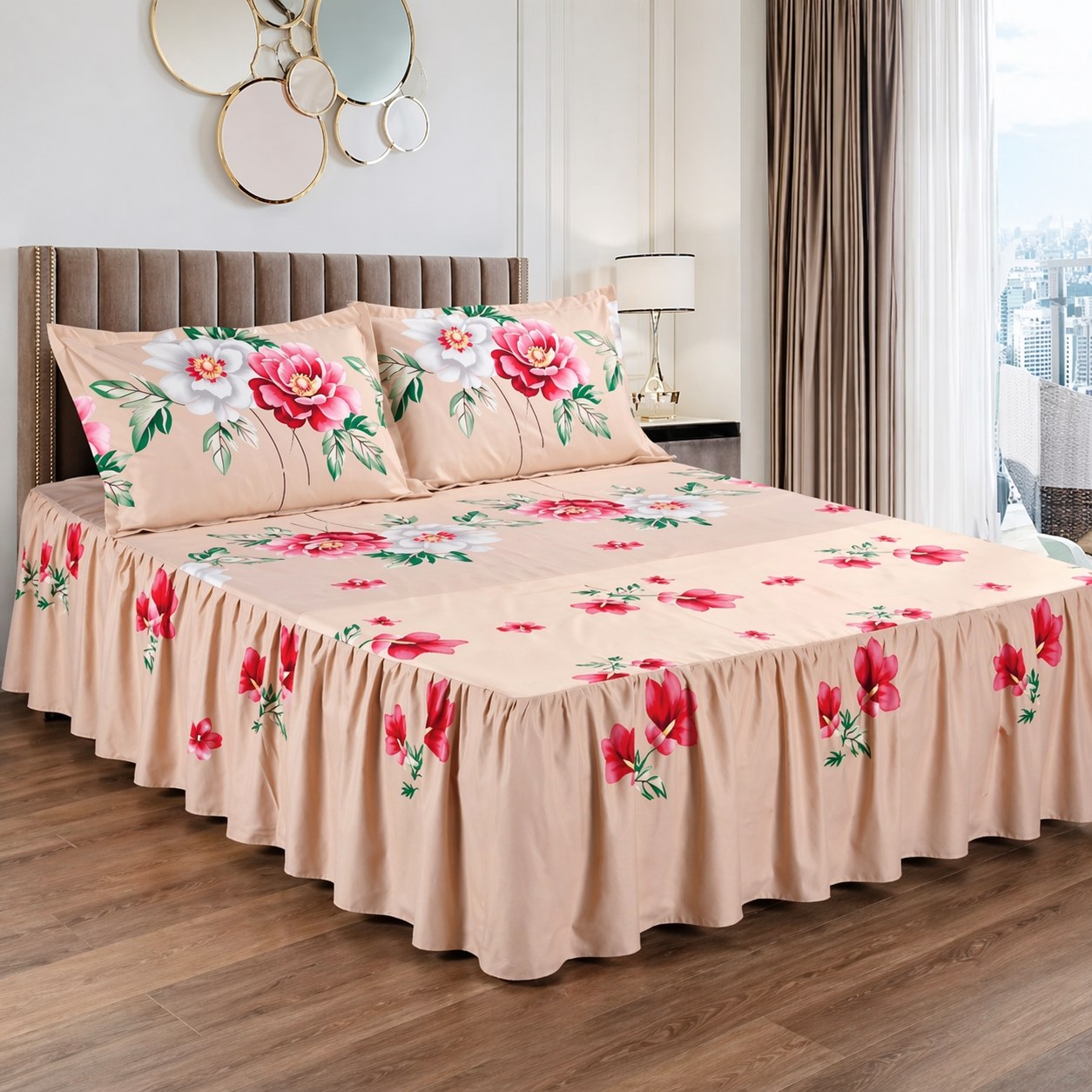
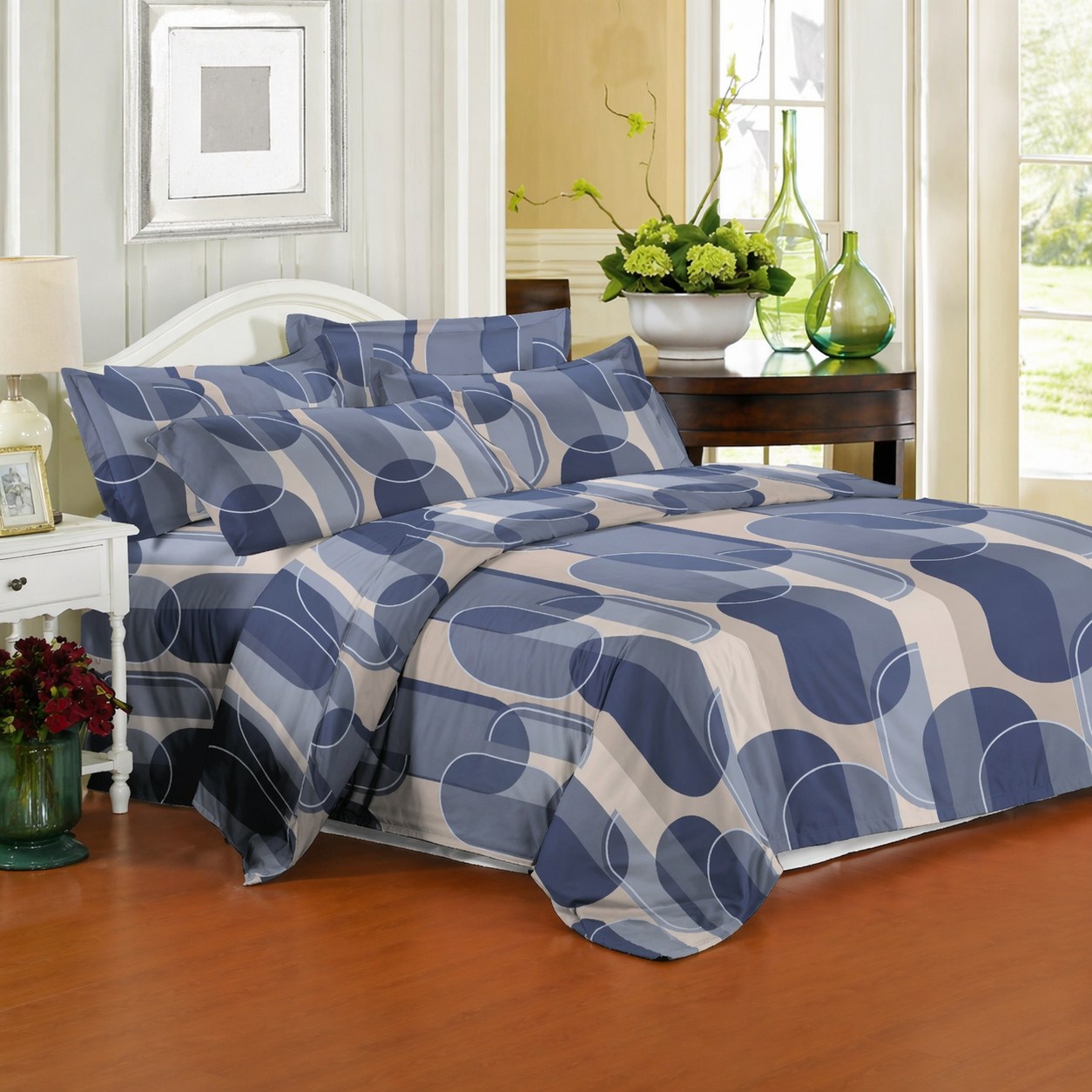
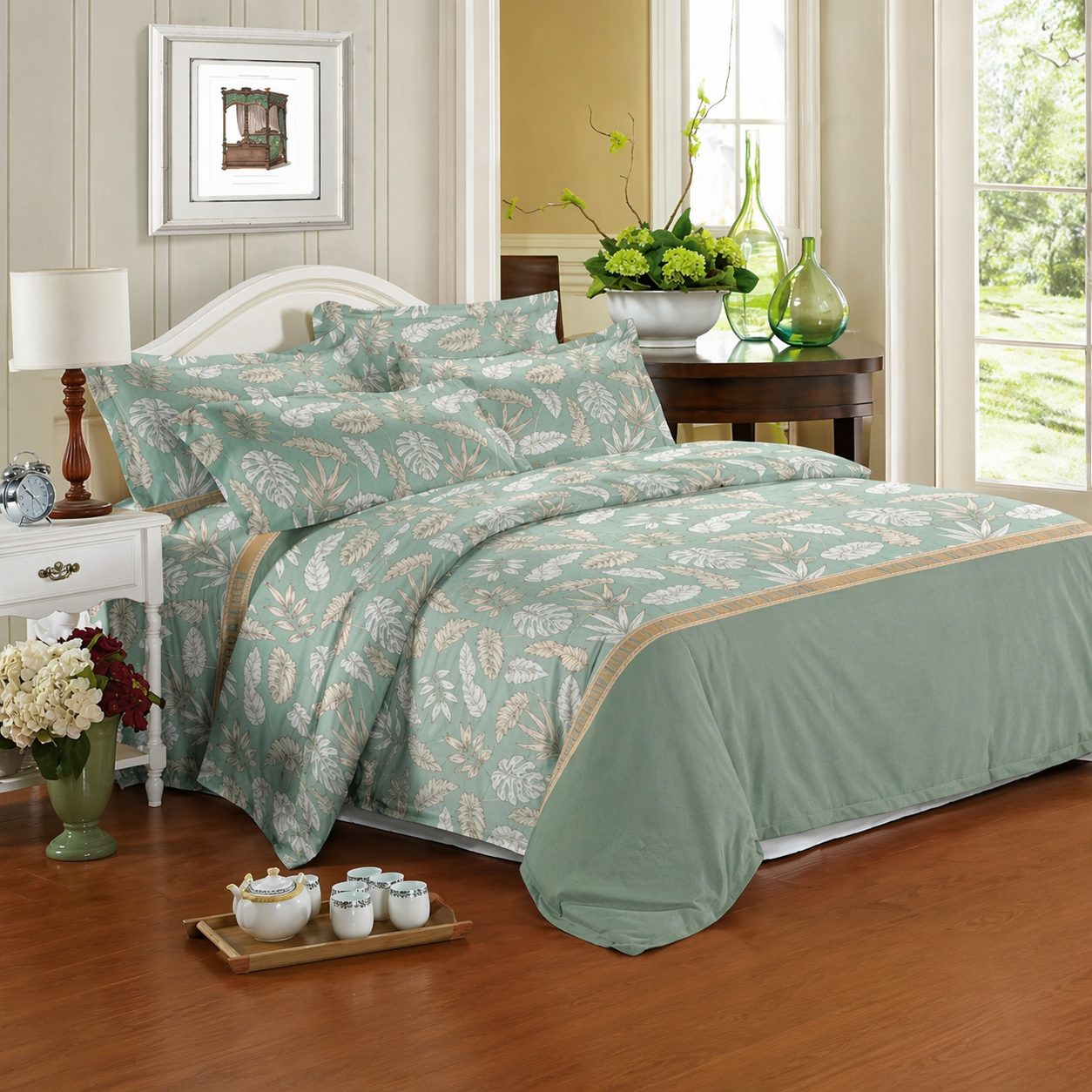
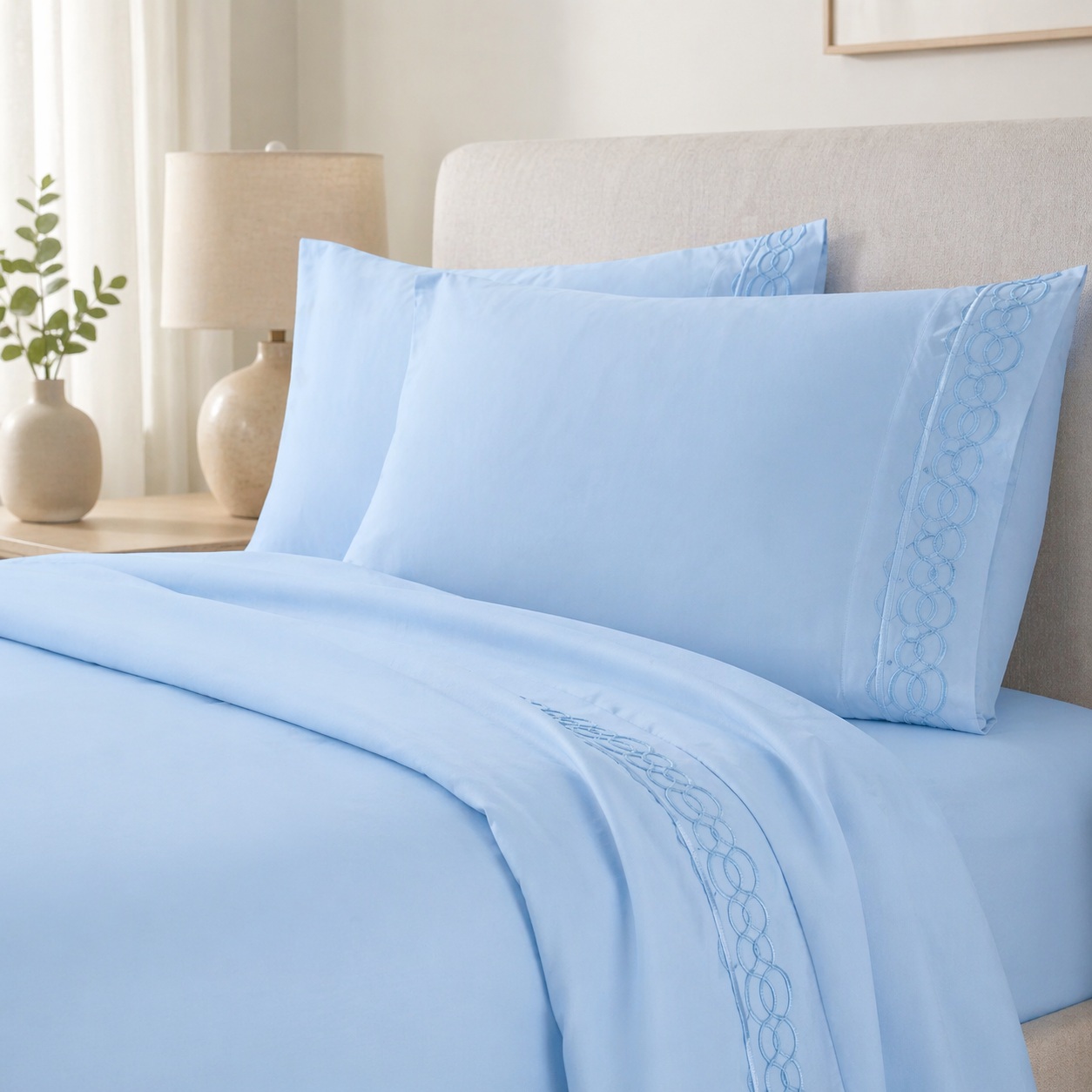
Bedding is no longer considered a basic household necessity in the global home textile market. It has developed into a product category where brand identity, comfort, design, and craftsmanship come together. The embroidered bedding set still stands out among the many options available today as a representation of sophistication, toughness, and added value.
Embroidered bedding sets have a sense of depth and texture that instantly improves their aesthetic appeal, in contrast to printed or plain bedding. The embroidery is more than just ornamental; it conveys a degree of skill that both buyers and customers will find appealing. Embroidered bedding sets are a product category that offers retailers and distributors both strong commercial potential and aesthetic differentiation.
The Core Value of Embroidered Bedding Sets
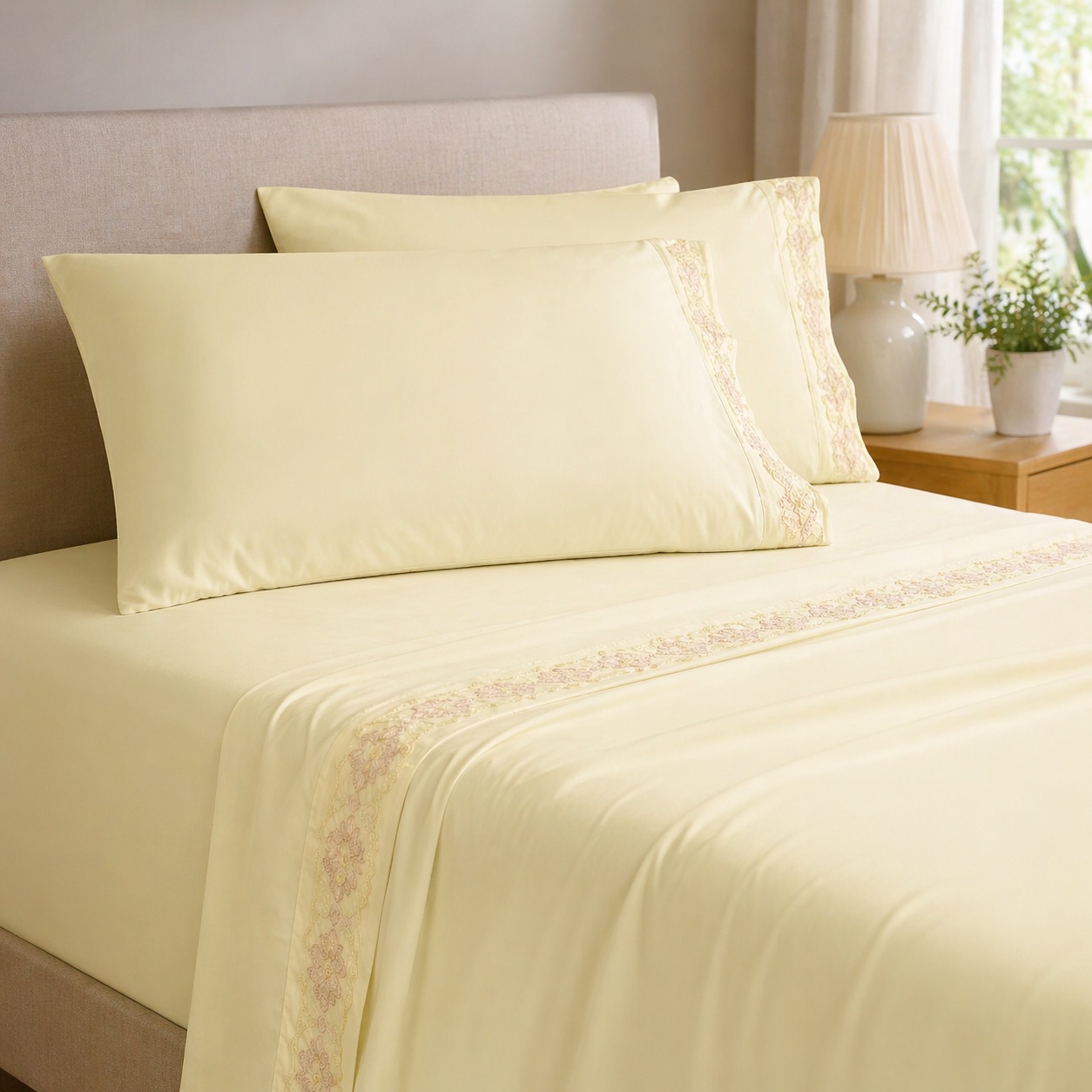
The presence of stitched decorative patterns incorporated directly into the fabric is the most fundamental characteristic of an embroidered bedding set. In contrast to surface printing, embroidery incorporates thread work into the fabric’s structure. Both durability and appearance are greatly impacted by this distinction.
The bedding’s tactile quality is improved by the subtle three-dimensional effect that embroidery produces. Customers who associate longevity with quality find embroidered bedding sets particularly appealing because the patterns maintain their clarity and structure even after repeated washings.
In terms of design, embroidery offers more flexibility. Patterns can easily adapt to various cultural preferences and interior styles, ranging from simple and contemporary to elaborate and traditional. One factor contributing to the success of embroidered bedding sets in both established and developing markets is their adaptability.
Factory-Direct Manufacturing for Ready-to-Sell Bedding Sets
Tighter control over quality, cost, and customization is made possible by producing bedding sets straight from our factory. Factory-direct production reduces lead times and enables quicker reaction to market trends, in contrast to trading-based supply chains.
Our production method is intended to produce ready-to-sell embroidered bedding sets that are both commercially competitive and compliant with international standards. A coordinated workflow manages the selection of fabrics, embroidery, cutting, sewing, and packaging.
This integrated approach preserves customization flexibility while guaranteeing consistency across large orders. Customers can modify certain components to fit their market positioning or select from standard product configurations.
Embroidery Techniques and Design Precision
The embroidery technique employed has a significant impact on the quality of an embroidered bedding set. The final look is influenced by pattern alignment, thread tension control, and precise stitching.
Pillowcases, duvet covers, and sheet borders are examples of important visual areas where embroidery is usually used. The design improves the overall appearance without overpowering the product, thanks to strategic placement. Attention to detail is demonstrated by symmetrical layouts and clean edges, which are particularly crucial for premium positioning.
Another important consideration is the color coordination between the base fabric and the embroidery threads. While contrast embroidery can be used to create a more striking, decorative effect, well-matched tones produce a cohesive design.
Fabric Selection and Comfort Performance
The choice of fabric dictates comfort and usefulness, while embroidery establishes the bedding set’s aesthetic appeal. As a manufacturer, we provide a variety of fabric choices to meet various market demands.
Because of its softness, breathability, and skin-friendliness, cotton is still a popular option. Cotton fabrics with a high thread count offer a smooth surface that enhances embroidery without sacrificing comfort.
Additionally, blended fabrics are frequently used to improve durability, ease of care, and wrinkle resistance. These textiles are especially well-suited for markets with high demand for low-maintenance home textiles.
Embroidery is applied in a way that maintains the flexibility of the fabric and does not cause stiffness or discomfort while being used, regardless of the type of fabric.
Standard Bedding Set Configurations for Market Efficiency
To streamline purchasing and inventory management, we manufacture embroidered bedding sets in standardized configurations that align with common consumer expectations. These ready-to-sell sets allow distributors and retailers to enter the market quickly without complex customization processes.
Standard set options include:
-
4-Piece Set: flat sheet or fitted sheet plus two pillowcases
-
5-Piece Set: 4-piece set with an additional duvet cover
-
6-Piece Set: 4-piece set plus two cushions or two extra pillowcases
-
8-Piece Set: 6-piece set combined with one curtain set
These configurations are designed to cover a wide range of retail scenarios, from entry-level home collections to more comprehensive bedroom solutions.
Customization Options for Size, Fabric, and Composition
Standard sets are efficient, but for brands aiming for particular markets, customization is frequently crucial. Complete customization across several parameters is supported by our manufacturing capacity.
Customers can specify dimensions, such as differences in mattress height and pillow proportions, to match local bed sizes. Climate, customer preferences, and price positioning can all influence the choice of fabric.
It is also possible to customize the arrangement of pieces in a set. While some markets favor additional decorative elements like cushions or matching curtains, others prefer fitted sheets over flat sheets.
Customization options typically include:
-
Set composition and number of pieces
-
Fabric type and thread count
-
Embroidery pattern, placement, and color
-
Packaging design and branding elements
This flexibility allows brands to differentiate their offerings while maintaining production efficiency.
Design Language and Market Adaptability
In markets where customers appreciate visual richness and detail, embroidered bedding sets are especially successful. While minimalist embroidery is more in line with contemporary interior design trends in some areas, traditional motifs and elaborate patterns have a strong resonance in others.
These variations are carefully taken into account during the design development process. Without changing the fundamental structure of the product, embroidery patterns can be modified to reflect local aesthetics.
While brighter colors and more intricate designs work well in promotional or seasonal collections, neutral color schemes with delicate embroidery frequently appeal to higher-end markets.
This adaptability makes embroidered bedding sets suitable for diverse distribution channels, including department stores, home textile chains, online platforms, and private-label brands.
Quality Control and Consistency
When manufacturing embroidered bedding sets on a large scale, consistency is crucial. Perceived quality can be impacted by even minor variations in stitch density or embroidery alignment.
From fabric inspection to final packaging, every stage of production is monitored by our quality control procedures. Finished goods are examined for structural and visual consistency, and embroidery machines are routinely calibrated to guarantee consistent stitching.
Because these points are most vulnerable to wear over time, extra care is taken where embroidery meets edges or seams. Techniques for reinforced stitching aid in preserving durability without sacrificing style.
Packaging and Ready-to-Sell Presentation
Packaging plays a crucial role in how embroidered bedding sets are perceived at the retail level. A well-presented product communicates quality before the packaging is even opened.
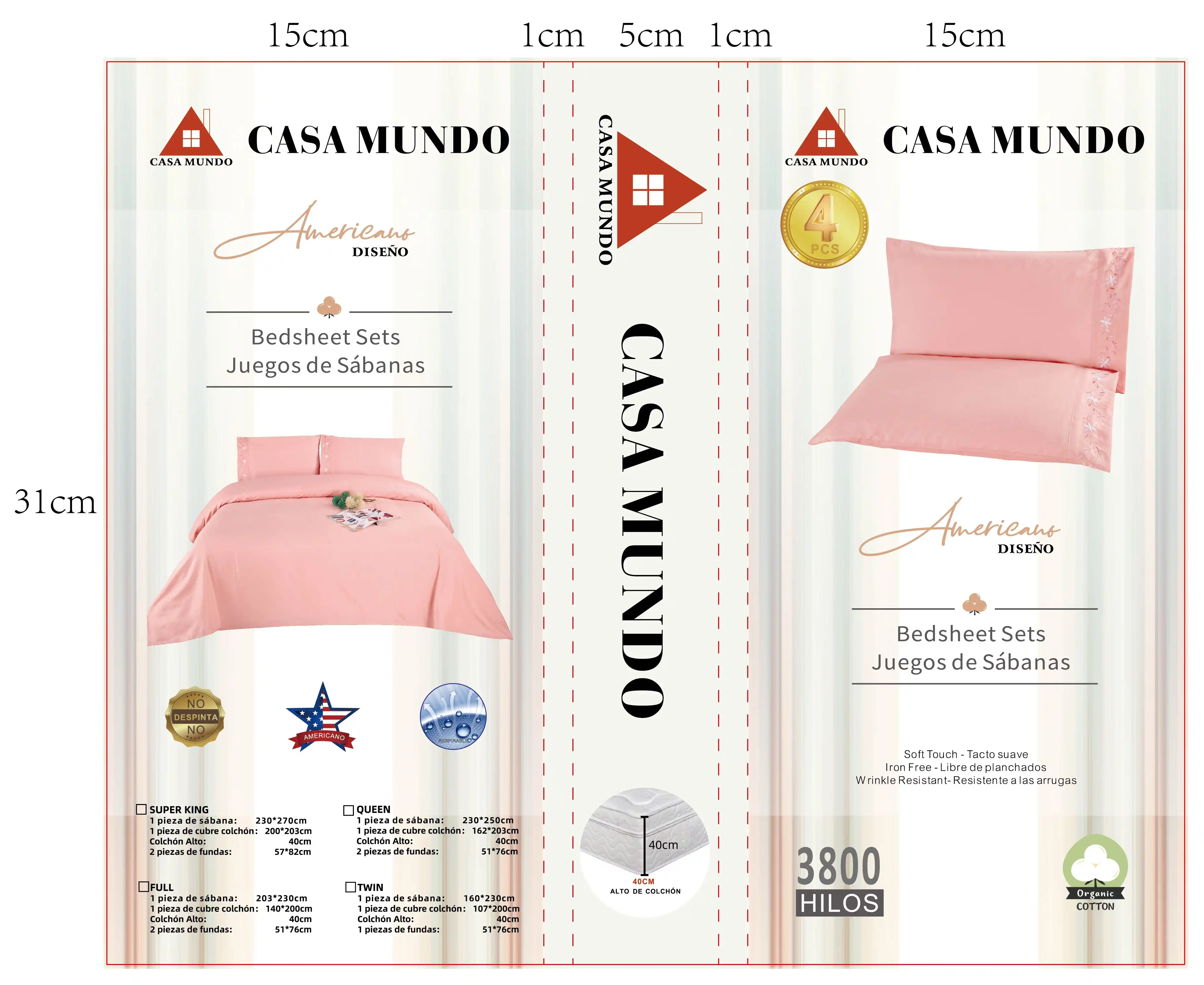
Our ready-to-sell bedding sets are packaged to protect embroidery details while showcasing key design features. Transparent windows, folded displays, or printed inserts can be used depending on branding requirements.
Clear labeling of fabric composition, set contents, and care instructions enhances consumer confidence and reduces post-sale inquiries.
Care, Maintenance, and Long-Term Use
One of the advantages of embroidered bedding sets is their durability. Unlike printed designs that may fade over time, embroidery retains its structure and color with proper care.
Modern embroidery techniques are compatible with machine washing, provided recommended care instructions are followed. Using colorfast threads and secure stitching ensures the embroidery remains intact even after repeated laundering.
Wrinkle-resistant fabric options further improve usability, making embroidered bedding sets suitable for households that prioritize convenience alongside aesthetics.
Applications Across Retail and Hospitality Sectors
While embroidered bedding sets are commonly associated with residential use, they also perform well in hospitality and commercial settings.
Boutique hotels and serviced apartments often use embroidered bedding to create a sense of luxury and brand identity. Custom embroidery patterns can incorporate subtle branding elements without appearing overly promotional.
In retail, embroidered bedding sets are frequently positioned as premium offerings or gift-oriented products, particularly during seasonal sales or festive periods.
Sustainability and Material Responsibility
As consumer awareness of sustainability increases, material sourcing and production practices are becoming more important. Organic cotton and environmentally responsible fabric options are increasingly requested for embroidered bedding sets.
Embroidery itself is a low-waste decorative technique, as it does not rely on chemical printing processes. When combined with responsibly sourced fabrics, embroidered bedding sets can align well with sustainability-focused brand narratives.
Market Trends and Consumer Expectations
Current market trends show a growing preference for bedding products that combine comfort with visual distinction. Consumers are moving away from purely functional purchases toward products that enhance living spaces emotionally and aesthetically.
Embroidered bedding sets meet this demand by offering a tactile and visual experience that printed textiles often cannot replicate. The perception of craftsmanship adds emotional value, which supports premium pricing strategies.
At the same time, affordability remains important. Factory-direct manufacturing helps balance design sophistication with competitive pricing, making embroidered bedding sets accessible to a broader audience.
Why Factory-Direct Supply Matters
Buyers have more control and transparency when they deal directly with a manufacturer. Without middlemen, delivery schedules, design modifications, and quality feedback can be handled more effectively.
This direct connection is especially beneficial for embroidered bedding sets because design and production teams frequently need to work closely together on embroidery details.
Scaling is also made easier by factory-direct supply. Production volumes can be raised without sacrificing consistency once a design has been verified.
Long-Term Value for Brands and Distributors
A bedding set with embroidery is not a fad item. Its appeal stems from its tangible quality and timeless design principles.
Offering bedding sets with embroidery enhances brands’ product portfolios by adding perceived value. These sets offer distributors a dependable category with consistent demand throughout the year.
In a cutthroat market, the ability to customize, along with standardized production procedures, keeps embroidered bedding sets profitable.
Final Perspective on Embroidered Bedding Sets
An embroidered bedding set is an example of a well-considered fusion of comfort, artistry, and business viability. It transforms ordinary bedding into a product that conveys quality, care, and design intent.
We give partners dependable products that can be tailored to a variety of markets without compromising efficiency or consistency by producing ready-to-sell embroidered bedding sets straight from our factory.
Embroidered bedding sets continue to provide enduring value for both consumers and businesses in a home textile market where distinction is more important than ever.