
Introduction
Hotel bedding must balance appearance, durability, and maintenance efficiency. Embroidered designs add a refined look, while materials need to withstand frequent washing and daily use.
Polyester embroidered bedding has become a popular choice for hospitality buyers due to its durability, easy care, and cost efficiency. Compared with traditional cotton options, polyester blends offer practical advantages for properties seeking reliable performance and long-term value.
So why does polyester embroidered bedding remain widely used in hotels? Its combination of design flexibility, durability, and operational benefits makes it a practical solution for modern hospitality needs.
What Makes Polyester Embroidered Bedding So Durable for Commercial Use?
Hotel bedding faces constant pressure from frequent turnover, industrial washing, and strict maintenance requirements. Linens must withstand high temperatures, chemical detergents, and repeated mechanical stress while maintaining a clean and professional appearance. Compared with cotton, polyester offers stronger durability and better dimensional stability, making it suitable for demanding hospitality environments.
Tensile Strength and Structural Integrity
Polyester fibres are naturally resistant to stretching, shrinking, and wear. Unlike cotton, which gradually loses strength after repeated washing, polyester maintains its structure through hundreds of commercial laundry cycles. Testing shows that polyester and polyester-cotton blends can typically withstand 250–300 washes before significant wear appears, compared with around 180 cycles for 100% cotton.
The tight plain-weave construction commonly used in polyester embroidered bedding also helps improve fabric stability. It reduces snagging and pilling while keeping embroidery details securely in place, allowing the bedding to maintain a refined appearance for longer periods.
Stain and Wrinkle Resistance
In hotel operations, easy maintenance is just as important as durability. Polyester absorbs less moisture than cotton, allowing common stains such as coffee or cosmetics to be removed more easily before they penetrate the fabric. This helps reduce rewash frequency and linen replacement costs.
Polyester embroidered bedding also offers better wrinkle resistance after drying, reducing the need for intensive ironing. For large hospitality properties, lower pressing requirements can help save both labour time and energy consumption.
Colour Retention and Embroidery Longevity
Embroidery quality directly affects the overall appearance of hotel bedding. Polyester embroidery threads provide excellent colour stability because the pigment is integrated into the fibre during production. This helps prevent fading, bleeding, and loss of pattern definition after repeated washing.
For hotels using customised designs or branded embroidery, this long-lasting appearance helps maintain consistent room presentation while reducing the need for frequent replacement.
Key durability advantages include:
- Withstands 250–300 commercial wash cycles, extending service life.
- Requires less ironing, improving laundry efficiency.
- Provides better stain resistance and reduces linen waste.
- Maintains embroidery colour and pattern clarity over time.
These advantages make polyester embroidered bedding a practical option for hospitality buyers seeking reliable performance and lower long-term operating costs.
How Does Embroidered Bedding Enhance the Guest Experience?
While durability is essential for hotel bedding, appearance also plays an important role in shaping guest impressions. Embroidery adds visual detail to functional linens, helping hotels create a more refined and consistent room environment.
Visual Appeal and Design Impact
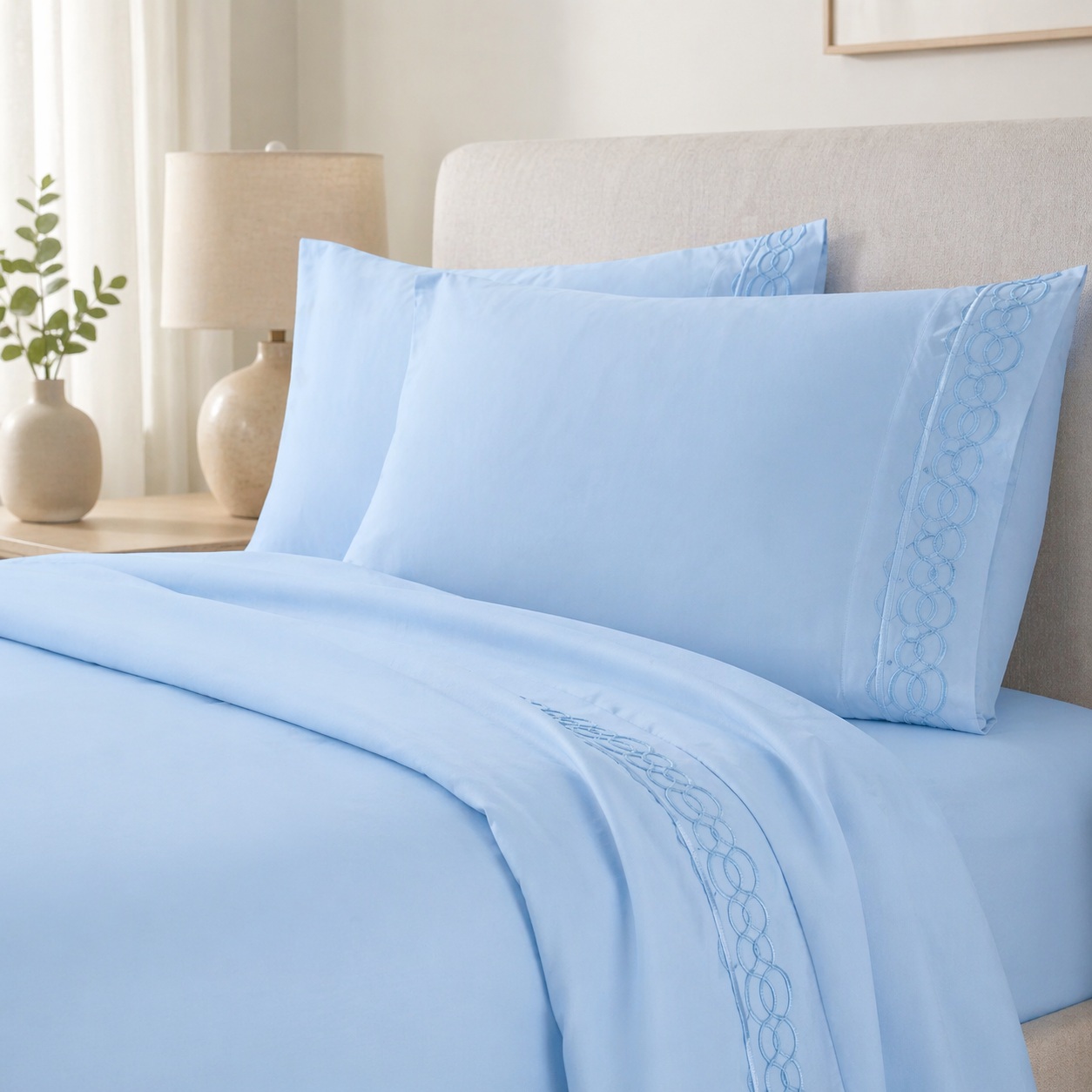
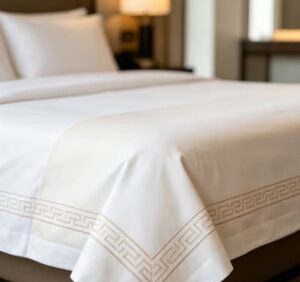
An embroidered border or pattern can instantly improve the overall presentation of a guest room. Compared with plain bedding, embroidered designs create a more polished appearance and help communicate attention to detail. Modern geometric and subtle tonal patterns are especially popular because they provide a premium look without appearing overly decorative.
For hotels, this design flexibility allows bedding to support different interior styles while maintaining a consistent brand image. A carefully selected embroidery design can make rooms feel more distinctive without requiring major changes to existing décor.
Brand Differentiation Through Custom Embroidery
Custom polyester embroidered bedding gives hotels an effective way to reinforce their visual identity. Whether through signature patterns, decorative borders, or embroidered logos, customised designs help properties create a recognisable room style.
Compared with large-scale renovations, updating bedding designs is a more practical way to refresh guest rooms. Because polyester embroidered bedding maintains colour stability and pattern clarity after repeated washing, hotels can achieve a long-lasting visual upgrade with lower replacement frequency.
A well-designed bedding solution not only improves room aesthetics but also supports guest satisfaction by creating a cleaner, more memorable accommodation experience.
Polyester Embroidered Bedding vs. Cotton: A Data‑Driven Comparison
The perennial debate deserves a clear‑eyed look at the numbers. The table below contrasts the two materials across the metrics that matter most to hotel operations.
| Property | 100% Cotton Bedding | Polyester Embroidered Bedding |
|---|---|---|
| Average cost per set | $45–$80 | $25–$50 |
| Wash cycles before replacement | ~180 | 250–300 |
| Wrinkles after drying | Heavy—requires ironing | Light—ready to use |
| Stain removal success | Moderate—absorbs spills | High—repels liquids |
| Embroidery colour fade (50 washes) | Noticeable fading | Minimal fading |
| Guest perceived luxury | High (traditional) | Moderate–High (with good design) |
| Energy cost per 100kg laundry | Higher (ironing) | Lower (42 kWh saved) |
Sources: Industry laundry benchmarks and hospitality procurement data.
Looking at the total cost of ownership (TCO), polyester embroidered bedding often comes out ahead. The lower purchase price, combined with extended lifespan and reduced laundering costs, can yield a TCO that is 20–30% less than cotton over five years. For a 300‑room property, that difference can exceed $50,000 annually.
Of course, cotton offers superior breathability and a natural feel that some guests prefer. But modern microfiber and polyester‑cotton blends (e.g., 50/50 or 60/40) narrow that comfort gap considerably, providing a softer hand while retaining polyester’s practical advantages. Many high‑end hotels now opt for blends to balance guest comfort with operational reality.
Where Does Polyester Embroidered Bedding Deliver the Most Value?
Not every property should treat polyester embroidered bedding the same way. Its strengths align better with certain business models than others.
Mid‑Range and Budget Hotels
Here, margins are thin, and occupancy is high. Polyester embroidered bedding is an obvious choice because it reduces replacement frequency, cuts ironing labour, and handles the constant turnover without looking ragged. The embroidered detail adds a touch of polish that elevates the room’s perceived value, helping these properties compete with more expensive neighbours.
Resorts and High‑Turnover Properties
Beach resorts, convention hotels, and airport properties face extraordinary wear: sand, sunscreen, spilled cocktails, and round‑the‑clock check‑ins. Polyester’s stain resistance and quick‑dry properties are lifesavers. Many resort operators specify embroidered bedding with lock‑stitch edges to prevent unravelling, ensuring that even after a thousand uses, the hems and motifs stay intact.
Boutique and Lifestyle Hotels
For smaller, design‑focused properties, custom embroidery is a differentiating tool. They can commission exclusive patterns that reflect local culture or their brand story. Because polyester embroidered bedding can reproduce intricate designs accurately and hold them over time, these hotels can offer a bespoke feel without the bespoke price tag of hand‑woven textiles.
Healthcare and Extended‑Stay Facilities
Though not traditional hotels, these segments share the same demands: durability, hygiene, and a welcoming appearance. Polyester embroidered bedding meets infection‑control standards (easy to sanitise) and provides a homelike aesthetic that improves patient or resident satisfaction.
In short, the product delivers its greatest return wherever laundry volumes are high, budgets are constrained, or brand aesthetics require consistent execution. The following list summarises the ideal use cases:
-
High‑occupancy mid‑scale and economy hotels need cost control.
-
Seasonal resorts with heavy guest turnover and outdoor exposure.
-
Design‑led boutiques that use embroidery as a brand signature.
-
Healthcare and senior living environments require frequent, high‑temperature washing.
Each of these segments benefits from the unique balance of performance and presentation that only polyester embroidered bedding can provide.
What to Look for When Sourcing Polyester Embroidered Bedding
Not all products labelled “polyester” are equal. Procurement managers should evaluate several key criteria.
Fabric Construction and GSM
Look for a tight plain weave with a GSM (grams per square metre) between 120 and 180 for summer use, or up to 220 for a heavier, more luxurious feel. Higher GSM usually means better durability and less transparency. Also ask about the polyester‑cotton ratio if blended—60/40 polyester/cotton is a sweet spot for durability and comfort.
Embroidery Quality and Thread Specifications
Inspect the stitching. Tight, even stitches with no loose ends indicate good workmanship. The embroidery should lie flat against the fabric, not pucker or bunch. Verify that the thread is solution‑dyed polyester, not standard polyester or rayon, to guarantee colourfastness. Also check the backing material—some cheaper embroidery uses paper‑based backings that disintegrate in hot water, causing the motif to collapse.
Supplier Reliability and Customisation Options
Lead times matter. Typical sampling takes 7–10 days, with bulk orders shipping in 15–30 days. Minimum order quantities often start at 2,000 metres. Work with a supplier who can provide consistent quality across batches and who offers flexible customisation—size, fabric blend, GSM, colour, design, and packaging. A good partner will also supply test certificates for colourfastness, shrinkage, and tensile strength.
For a quick checklist before placing your next order, consider these five points:
-
Request a lab‑test report for wash durability (minimum 200 cycles).
-
Confirm that embroidery thread is solution‑dyed polyester.
-
Verify the fabric weight (GSM) matches your climate and seasonality.
-
Ask for a strike‑off sample to see the actual embroidery on the chosen fabric.
-
Negotiate lead times and MOQs that align with your inventory turnover.
Having these items checked off will save you from unpleasant surprises after the first bulk delivery.
Sustainability and the Future of Polyester in Hospitality
Polyester has faced criticism for its environmental footprint, but the industry is responding with innovations that may change the conversation.
Innovations in Biodegradable Polyester
Technologies like CiCLO allow polyester to biodegrade in anaerobic environments at rates approaching those of natural fibres. When added during fibre extrusion, the additive creates weak spots in the polymer chain that microbes can attack, breaking down the material without compromising its in‑use durability. Hotels can now specify polyester embroidered bedding that is both long‑lasting and less persistent in landfills.
Balancing Durability with Environmental Responsibility
Some argue that a product lasting 300 washes is inherently more sustainable than one needing replacement after 180, simply because fewer resources are consumed over time. When you factor in lower energy and water use in laundering (less ironing, less rewashing), polyester embroidered bedding can have a lower net environmental impact per room‑night than cotton. Recycled polyester (rPET) is also gaining traction, offering a closed‑loop option that appeals to eco‑conscious travellers and corporate sustainability targets.
The future points toward smarter blends, better recycling infrastructure, and more transparent supply chains. Hoteliers who prioritise sustainability need not abandon polyester; they just need to choose suppliers who invest in these advances.
Conclusion
Polyester embroidered bedding has become a practical choice for hospitality businesses by combining durability, easy maintenance, and visual appeal. It withstands frequent commercial laundering while helping hotels maintain a consistent and refined room presentation.
As the hospitality industry continues to focus on operational efficiency and guest experience, polyester and its blends will remain valuable materials for hotel linen programs. From budget properties to resorts and boutique hotels, selecting the right bedding solution can help reduce replacement costs while supporting brand aesthetics.
If you are looking for customised options in fabric construction, embroidery design, or sizing, our team can help develop a bedding solution that meets your property’s specific requirements.